Central Configurations: N = 100 – 5000
Gravitational molecules at minimum shape complexity
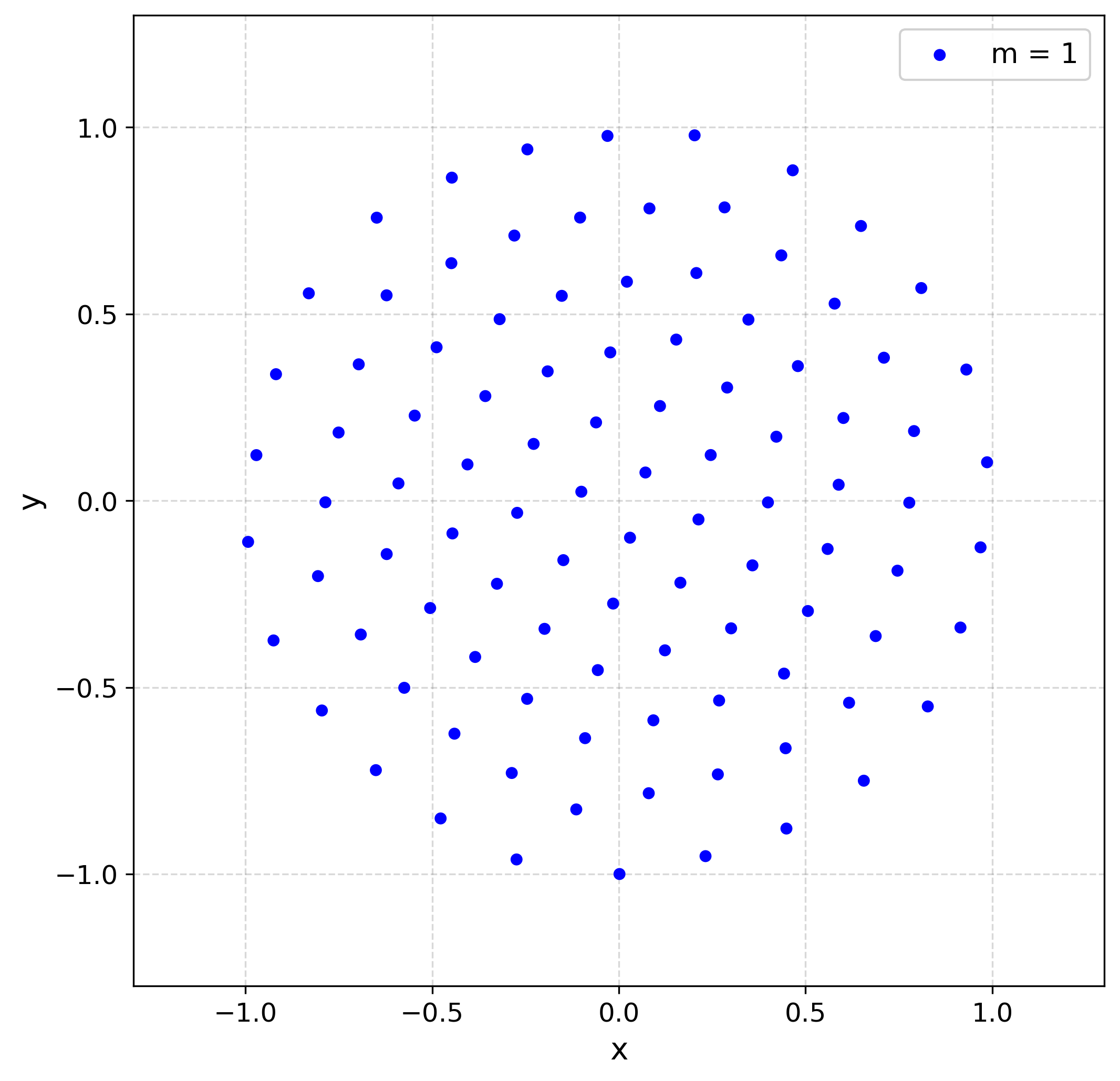
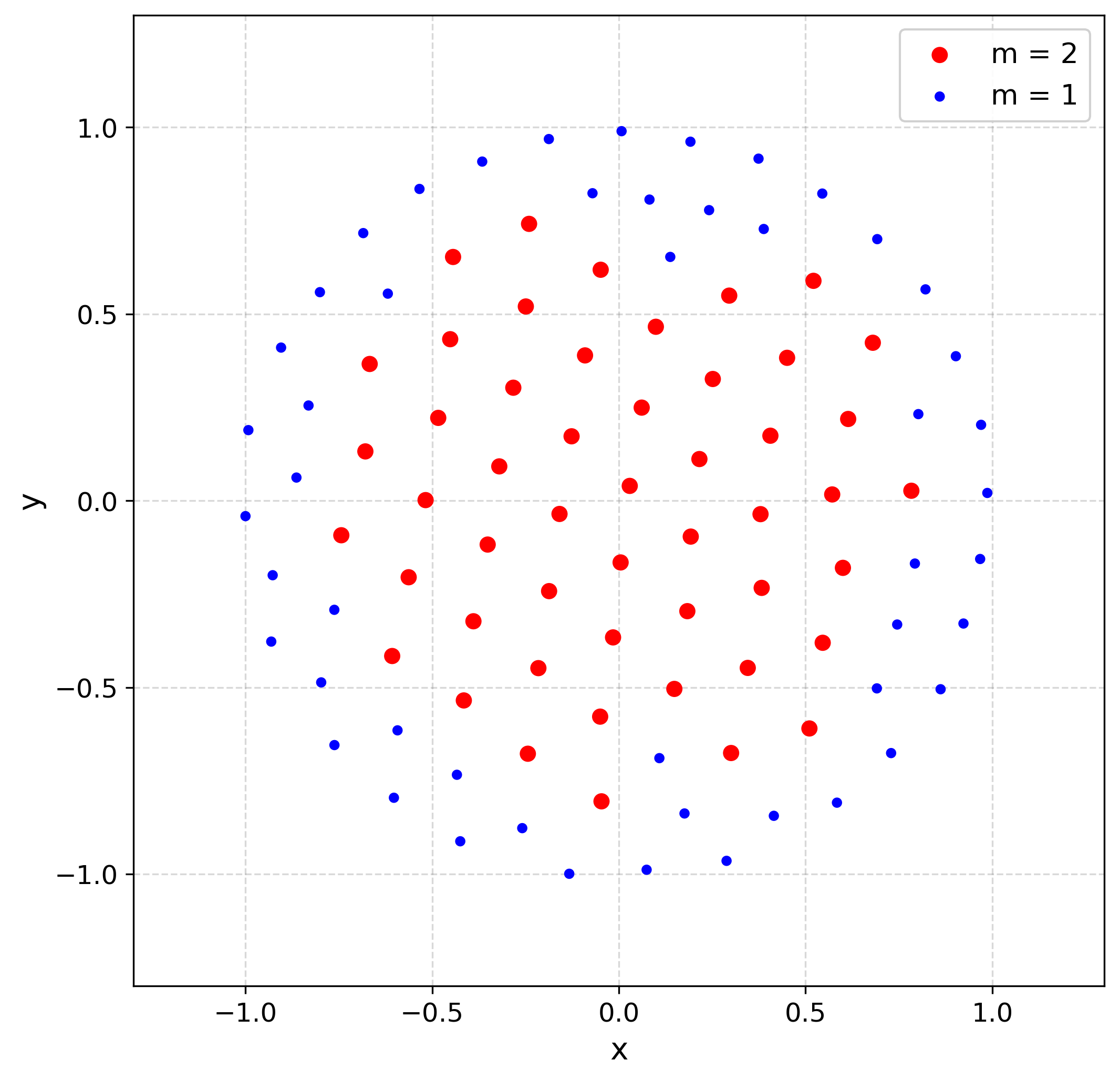
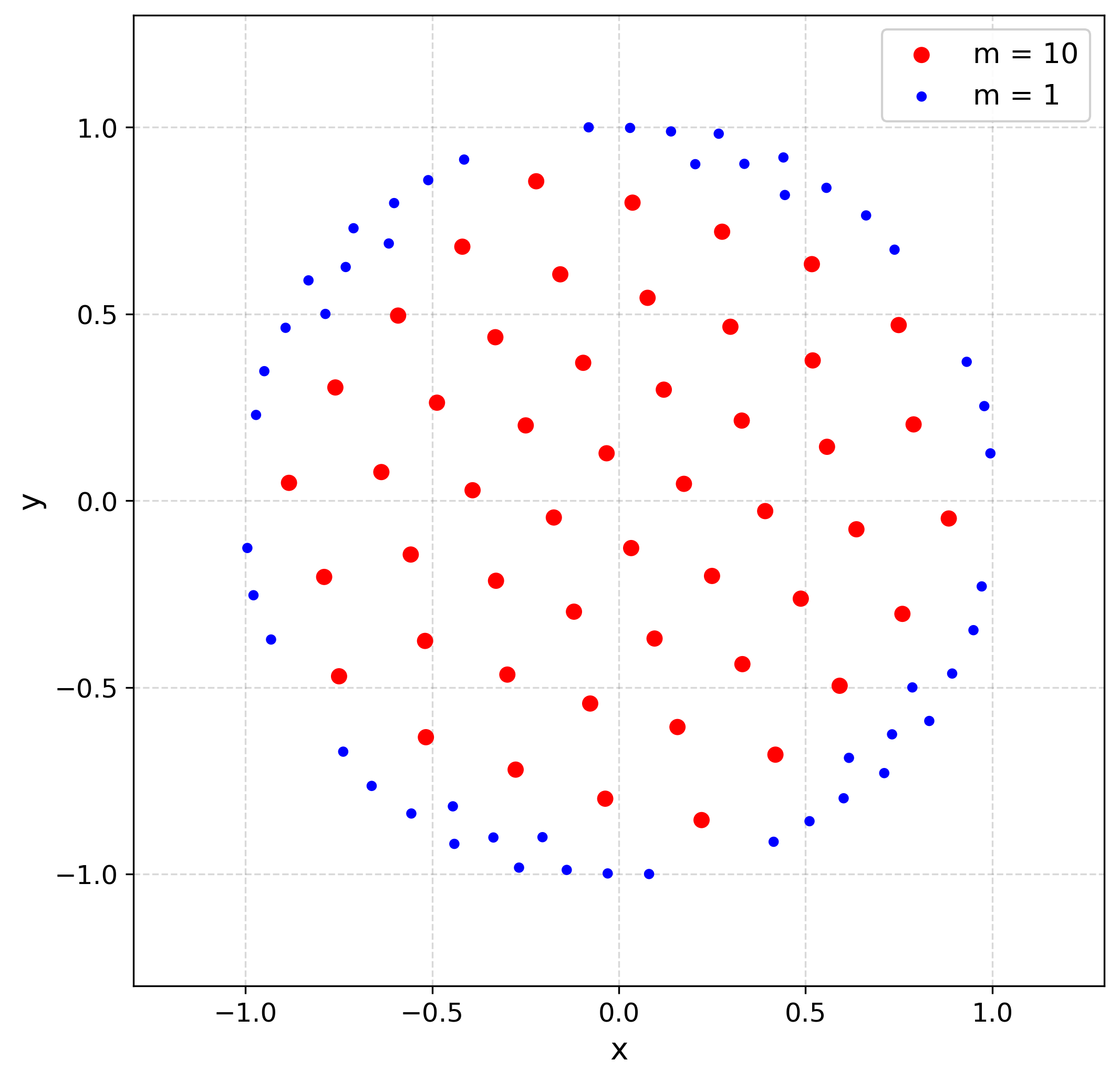
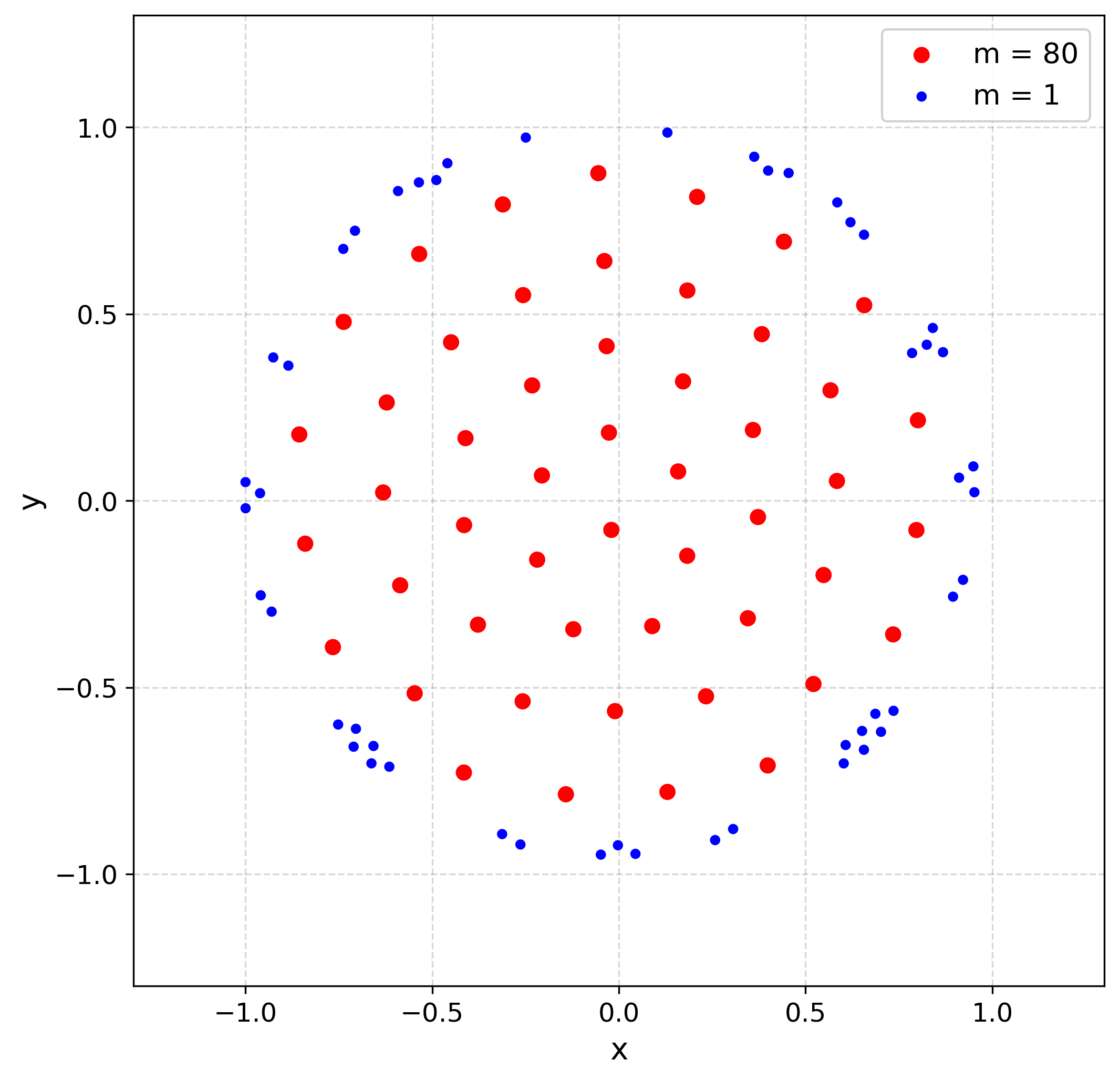
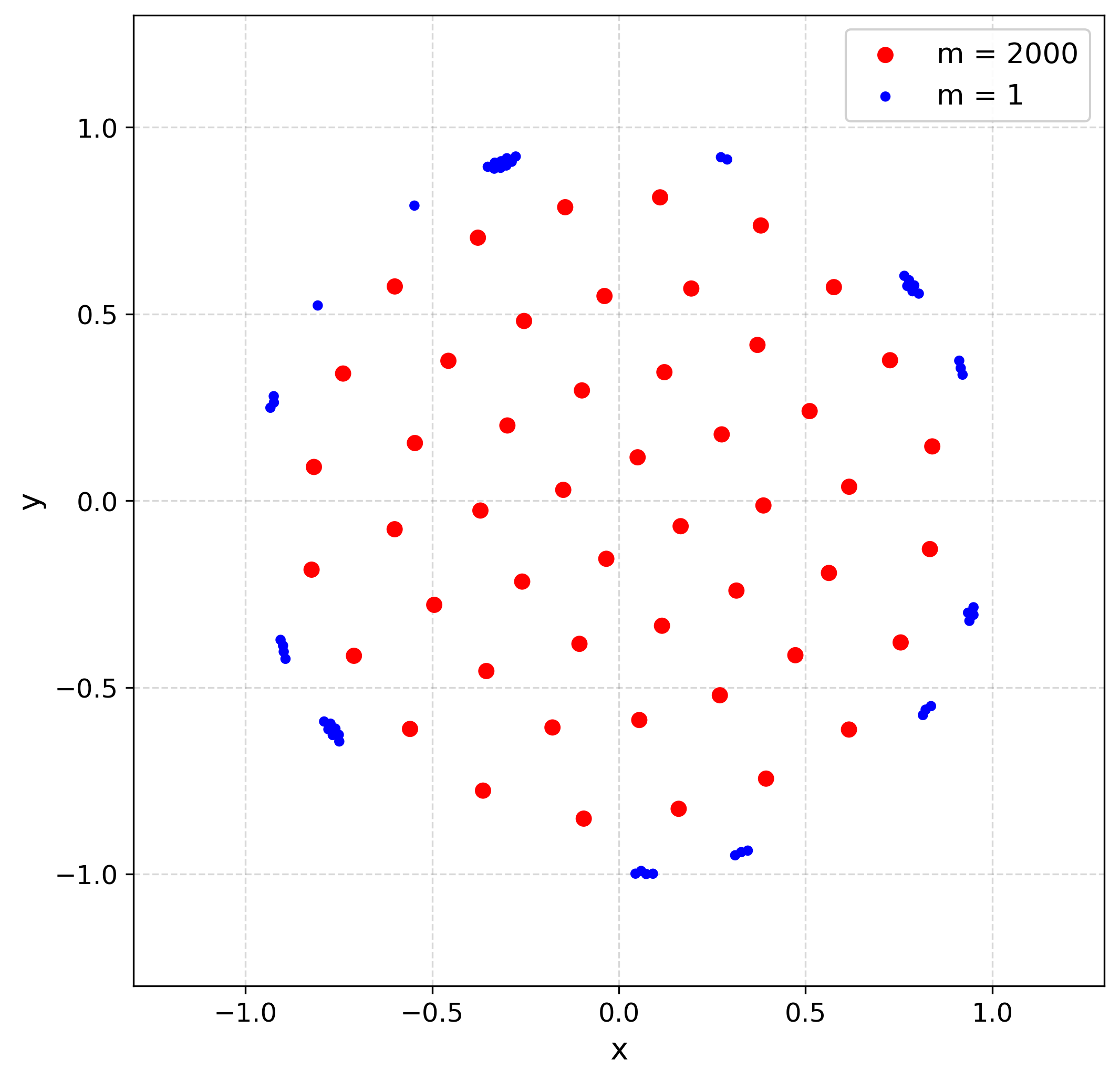
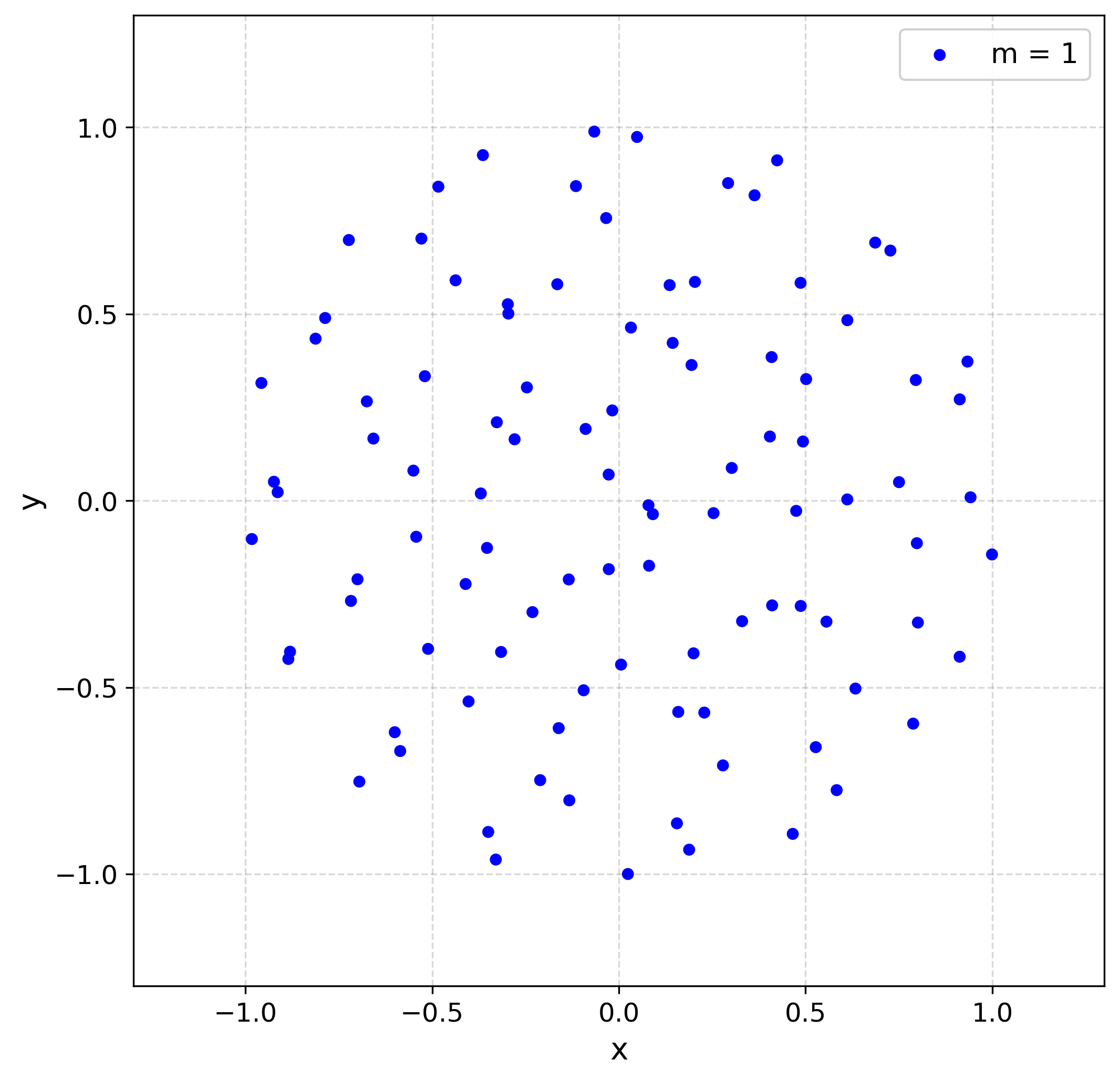
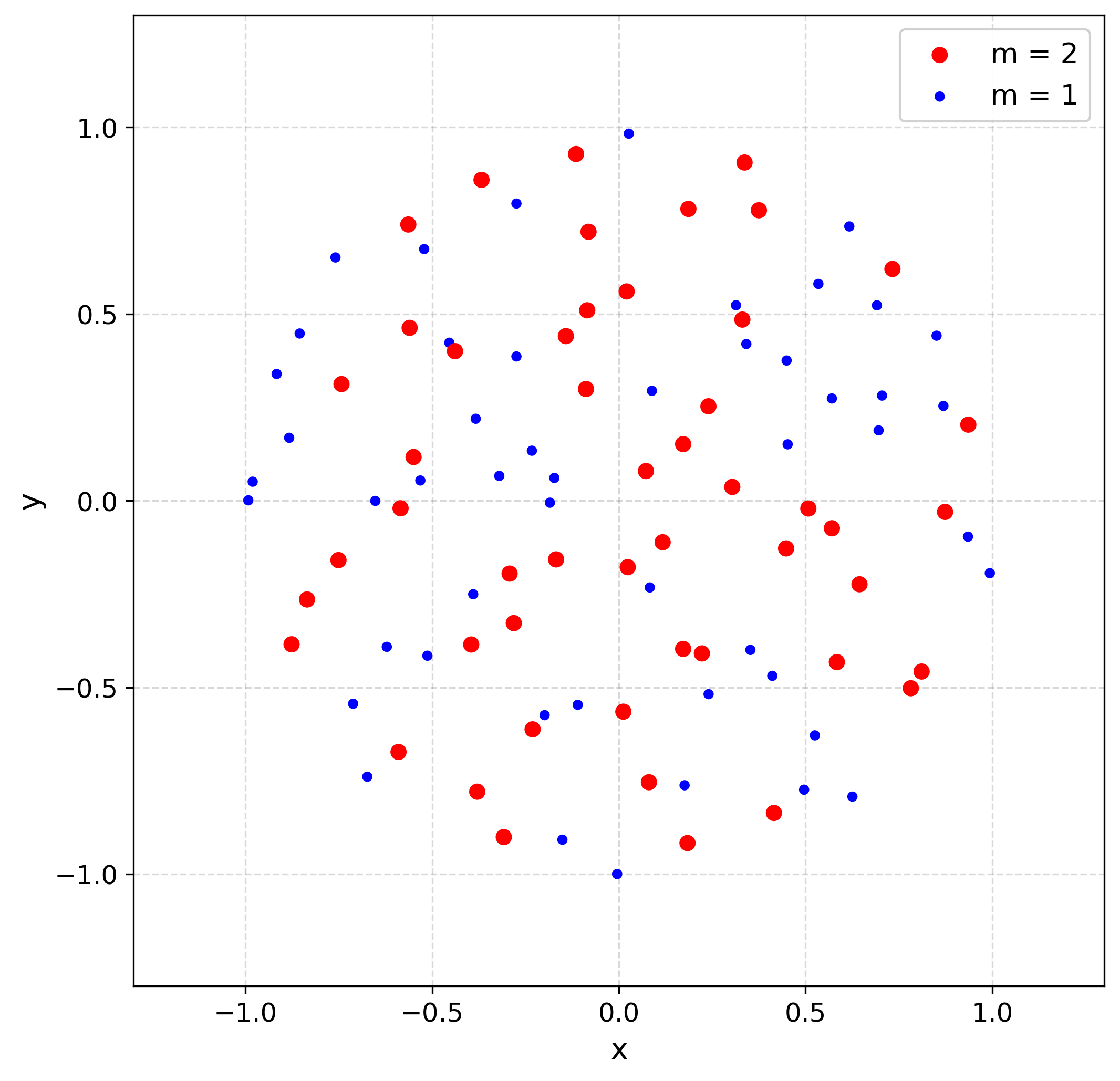
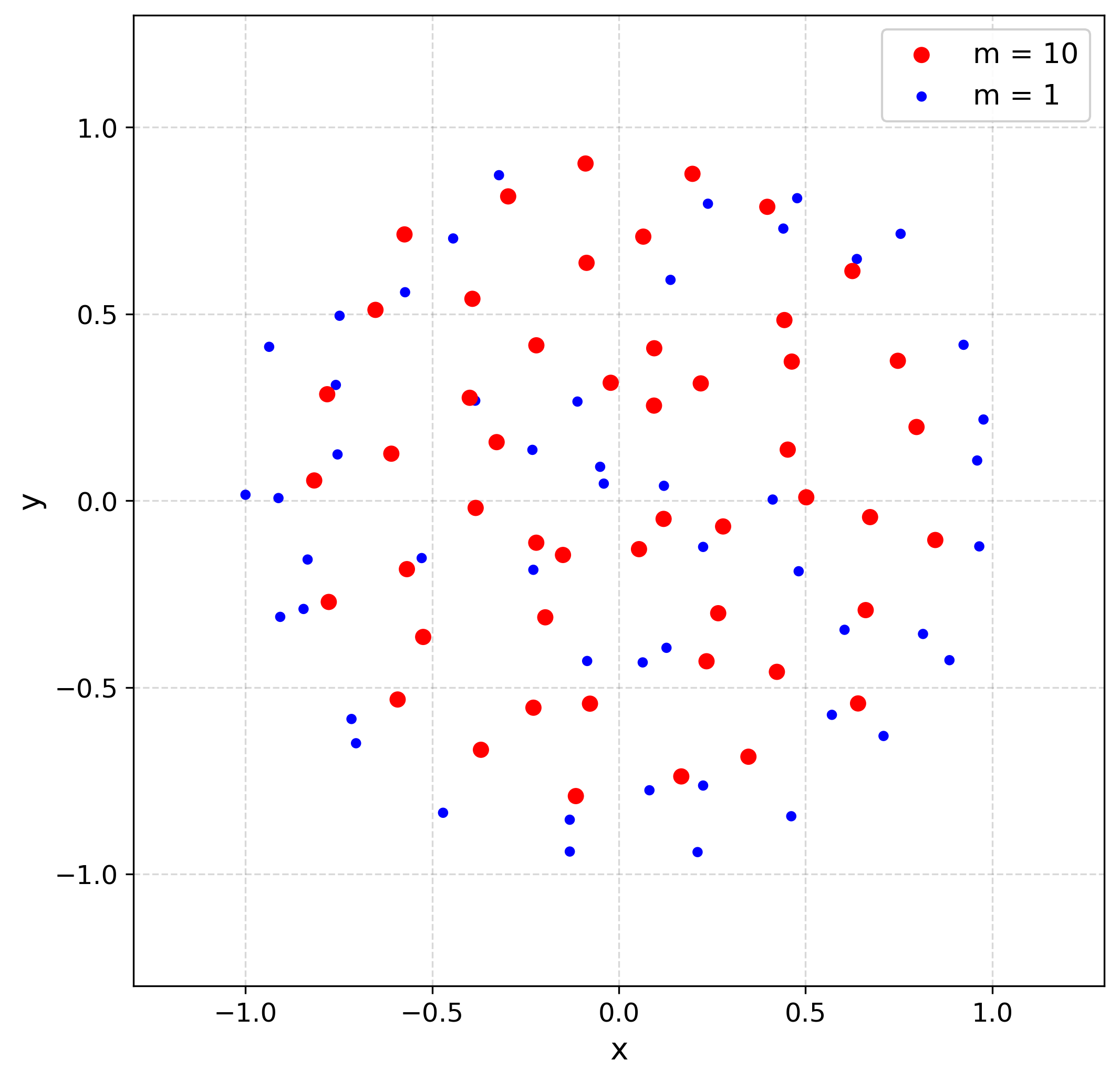
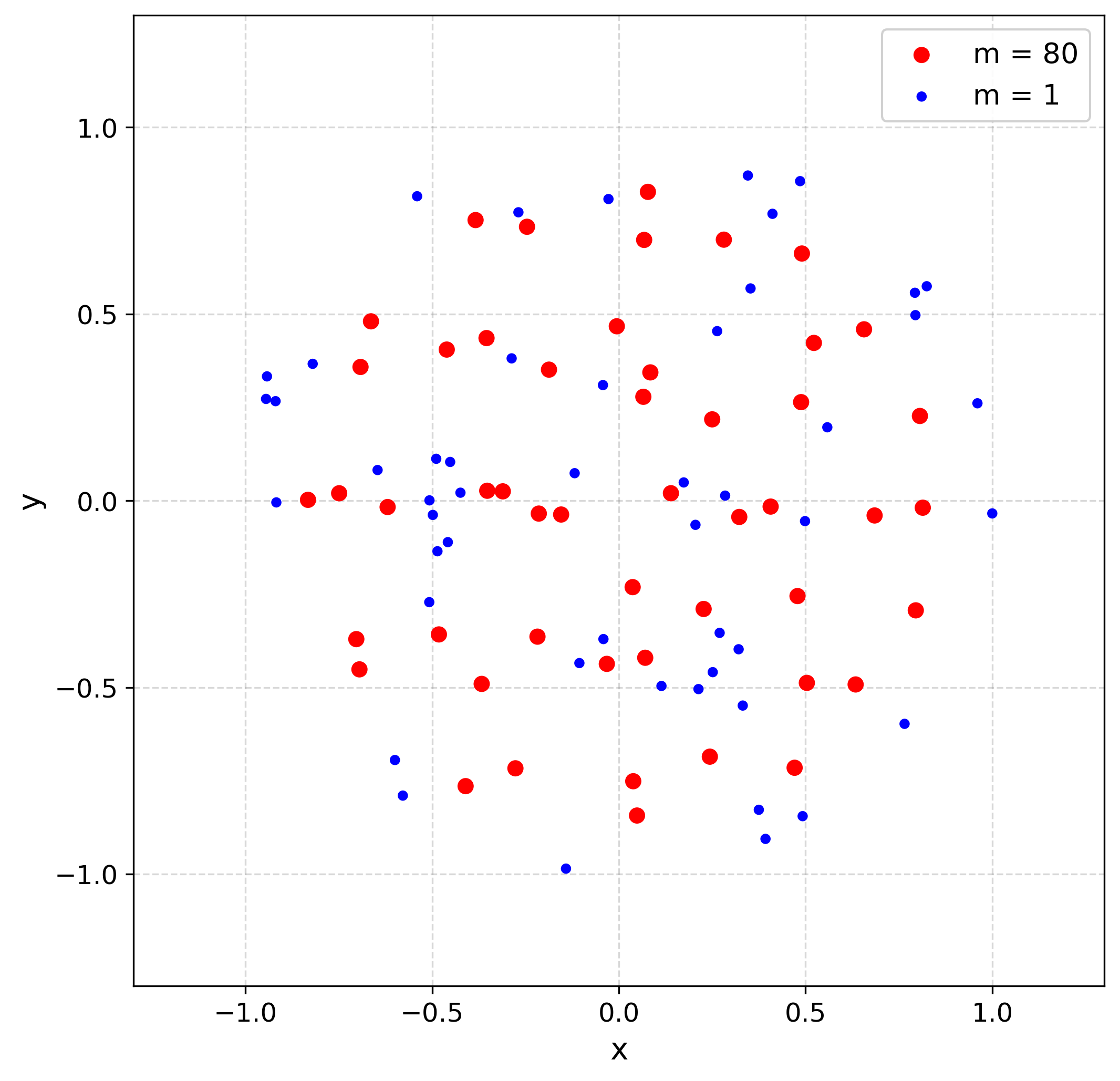
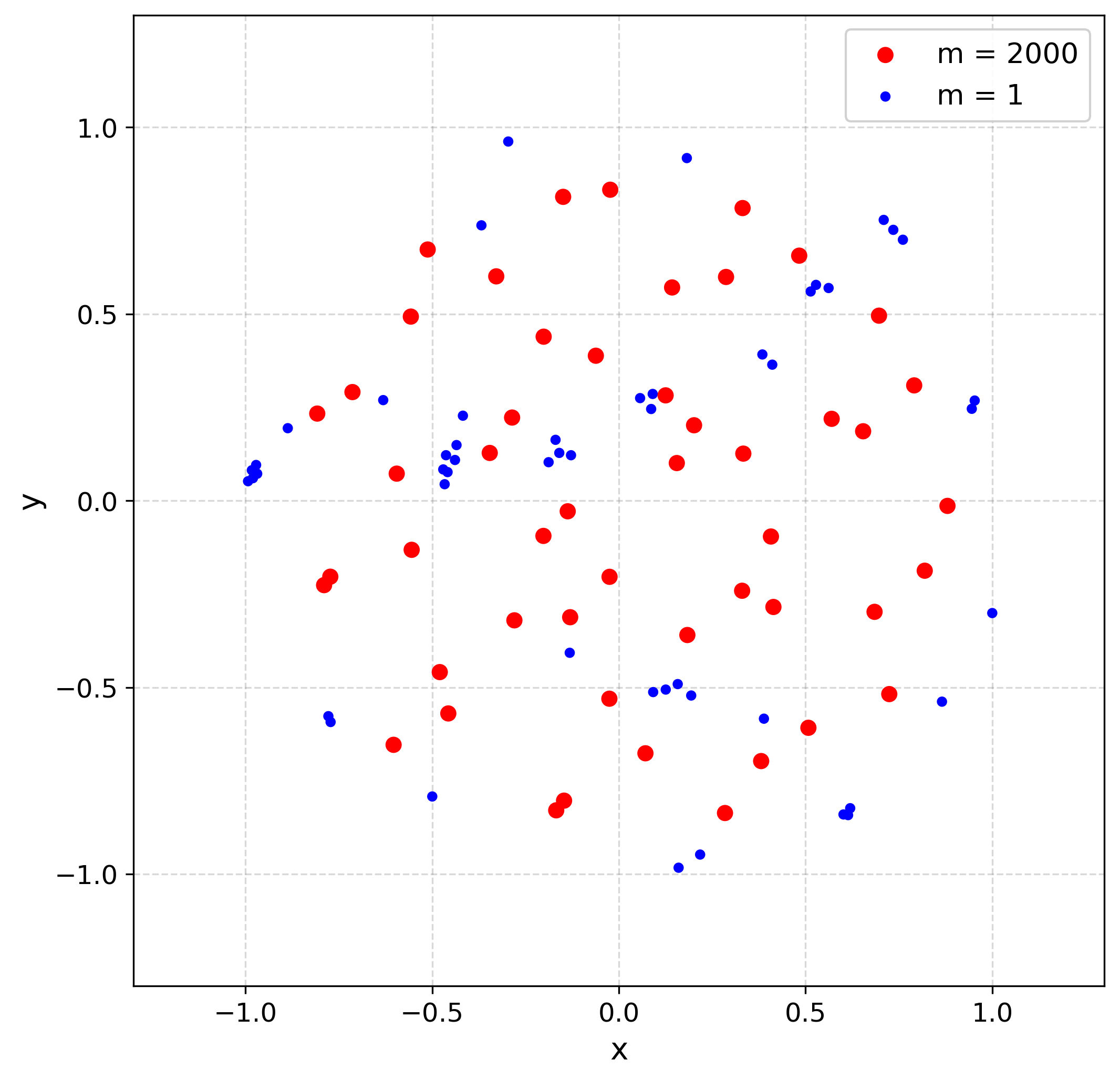
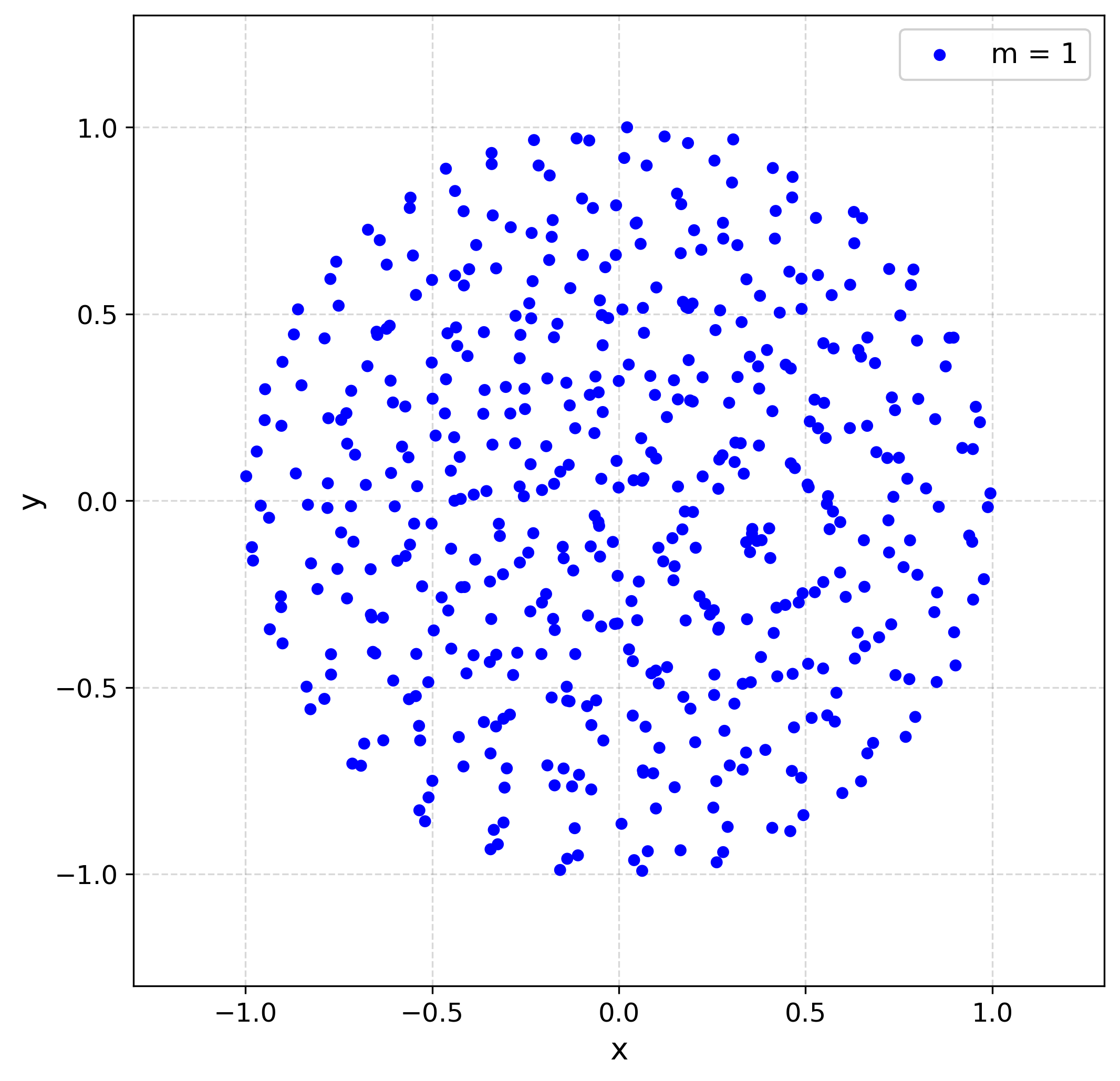
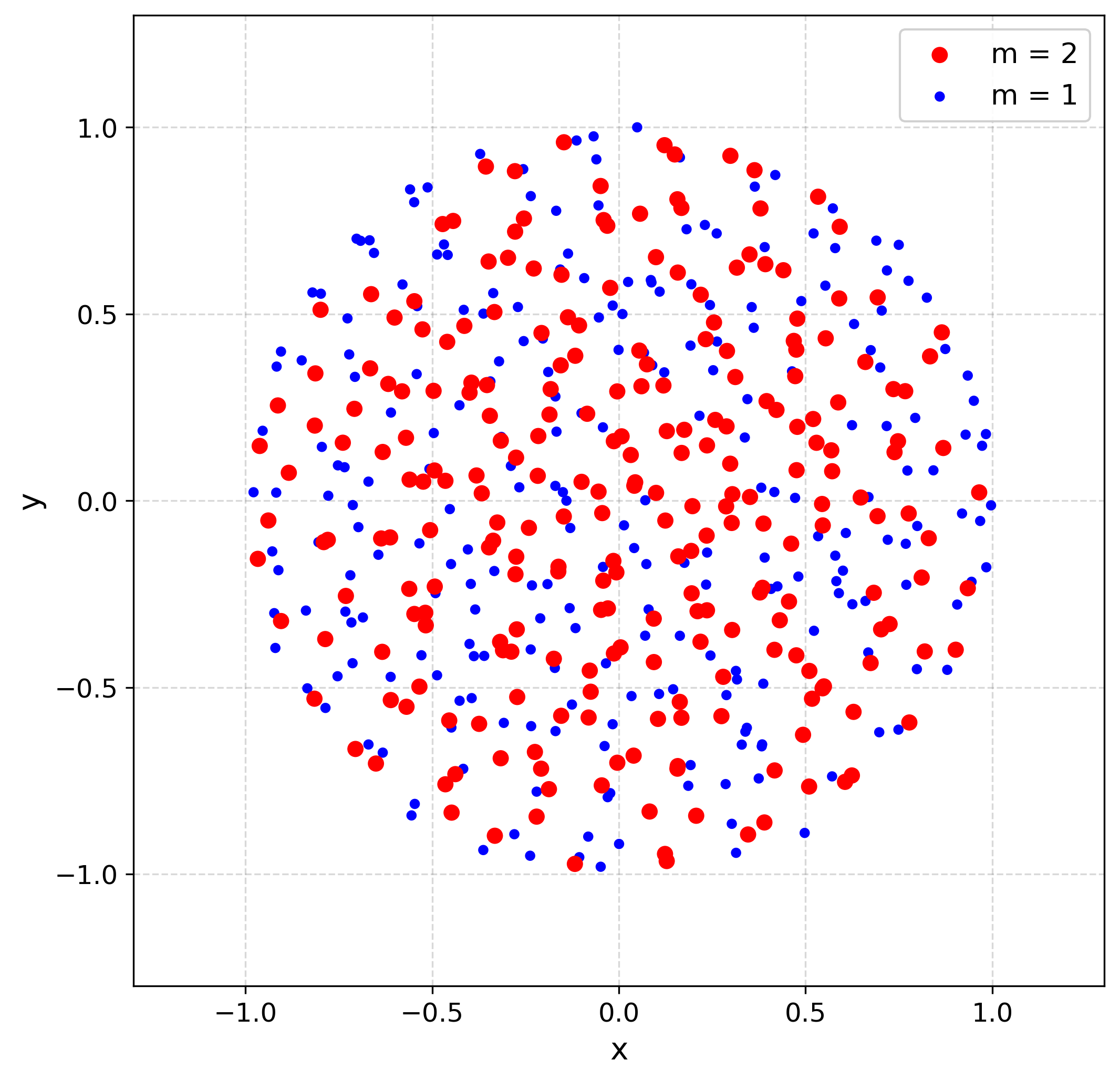
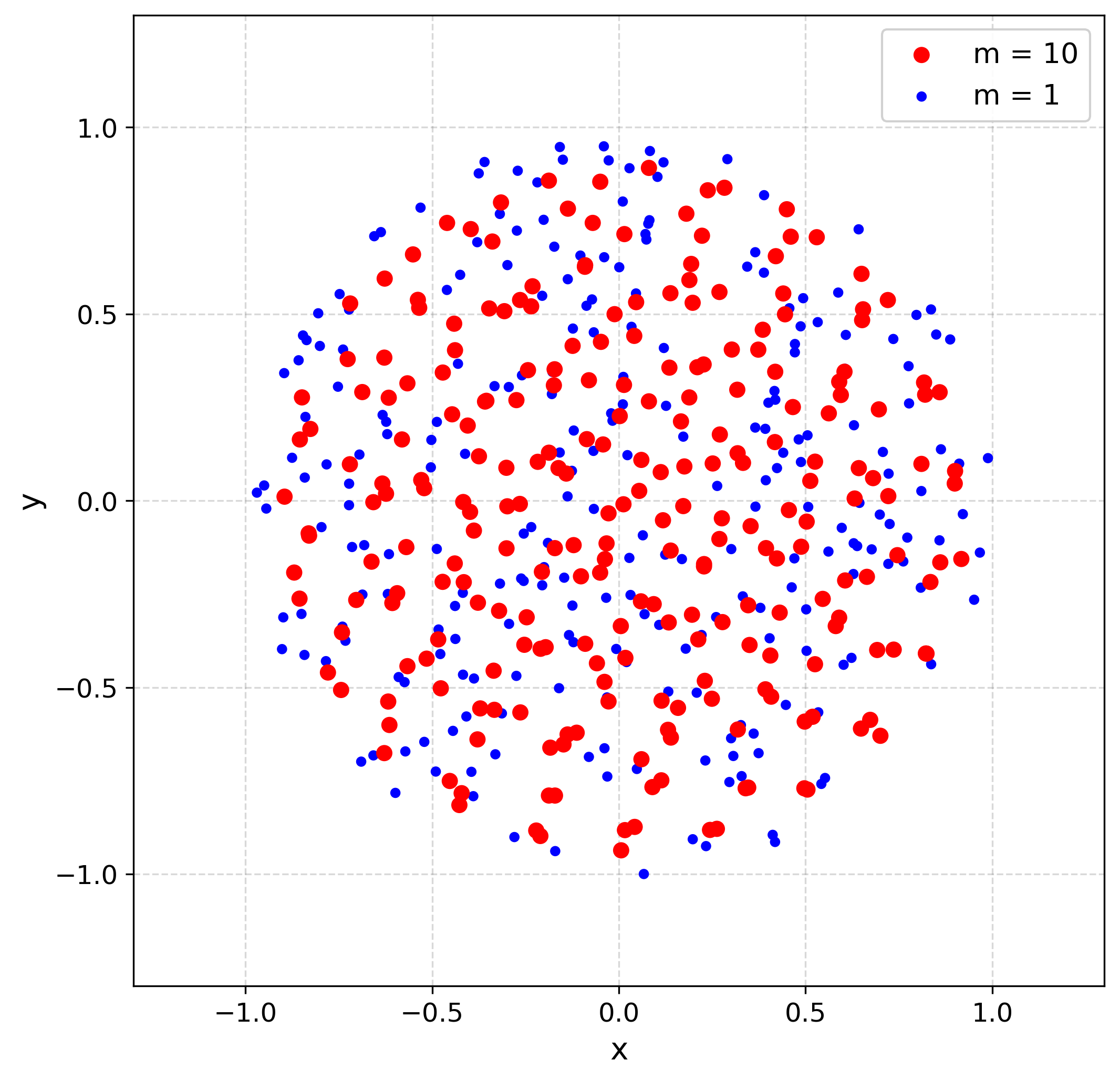
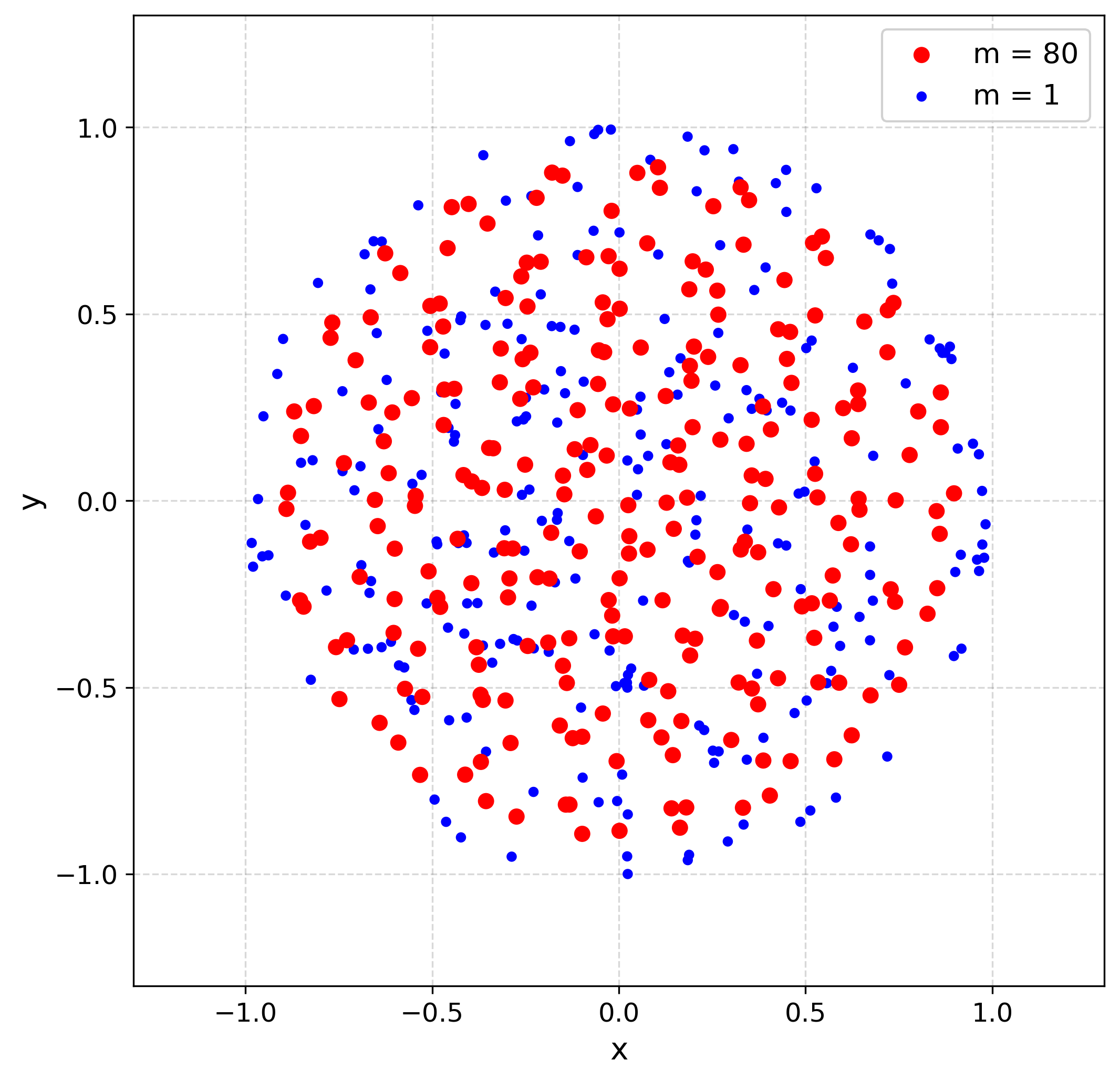
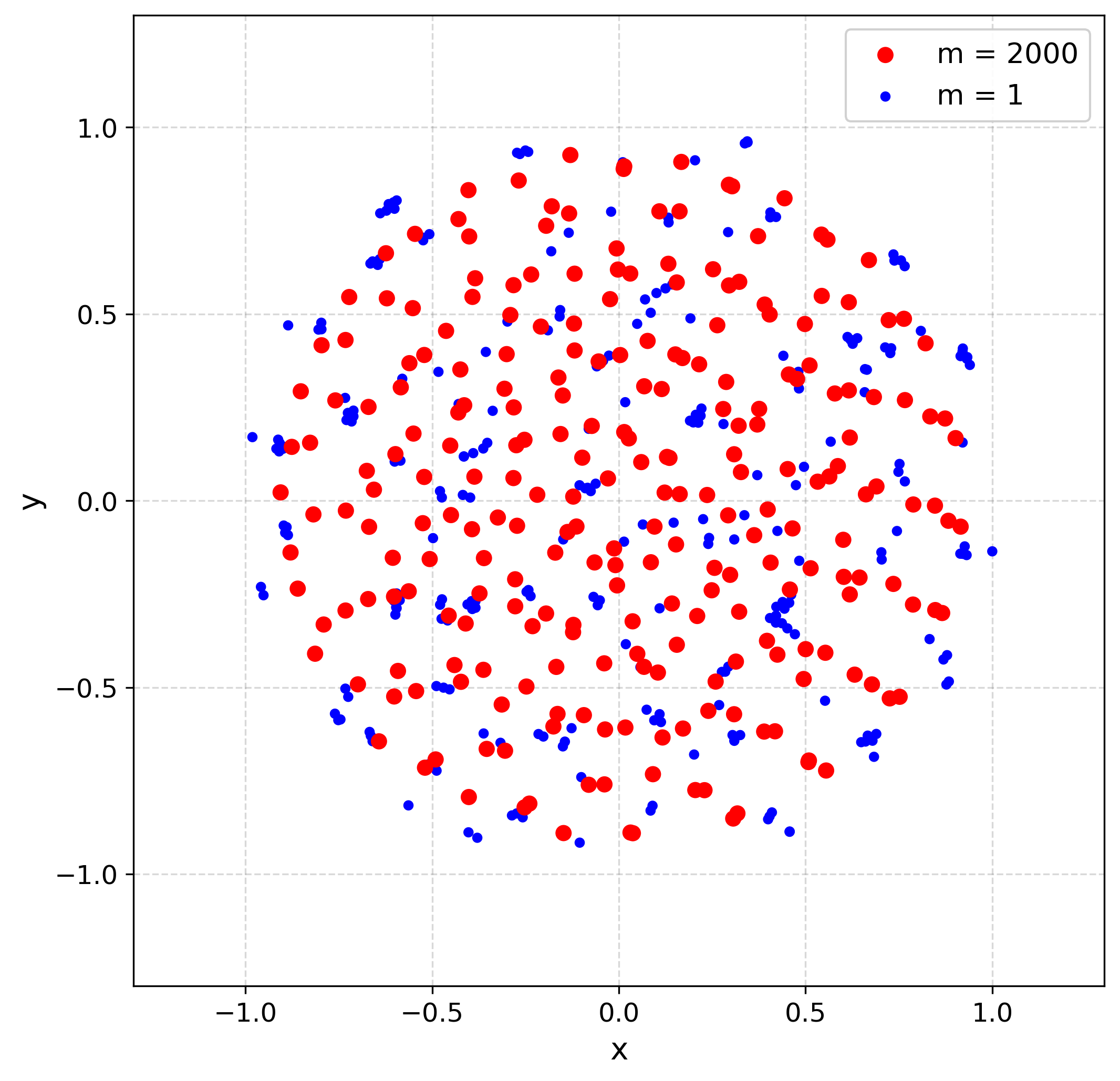
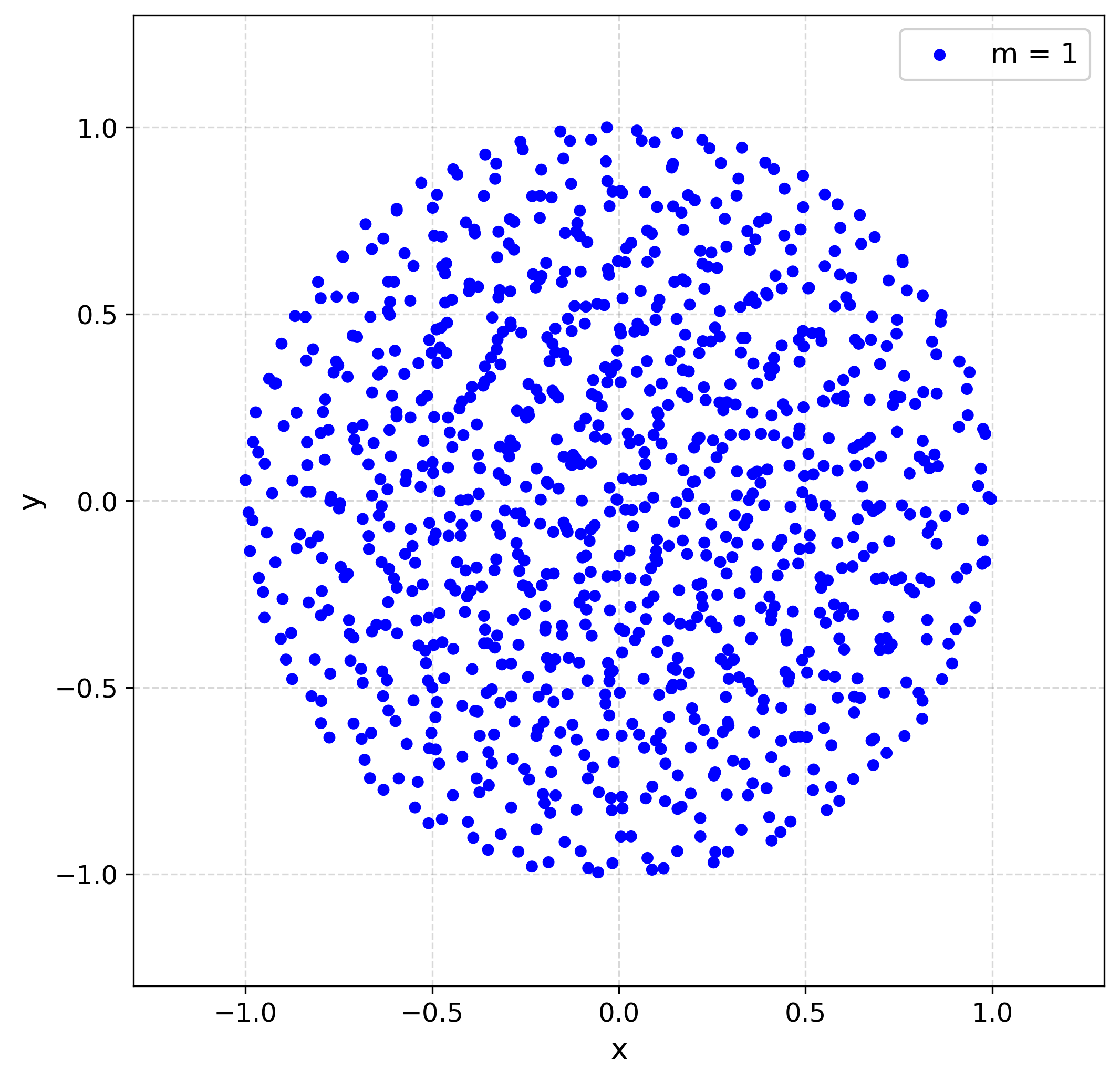
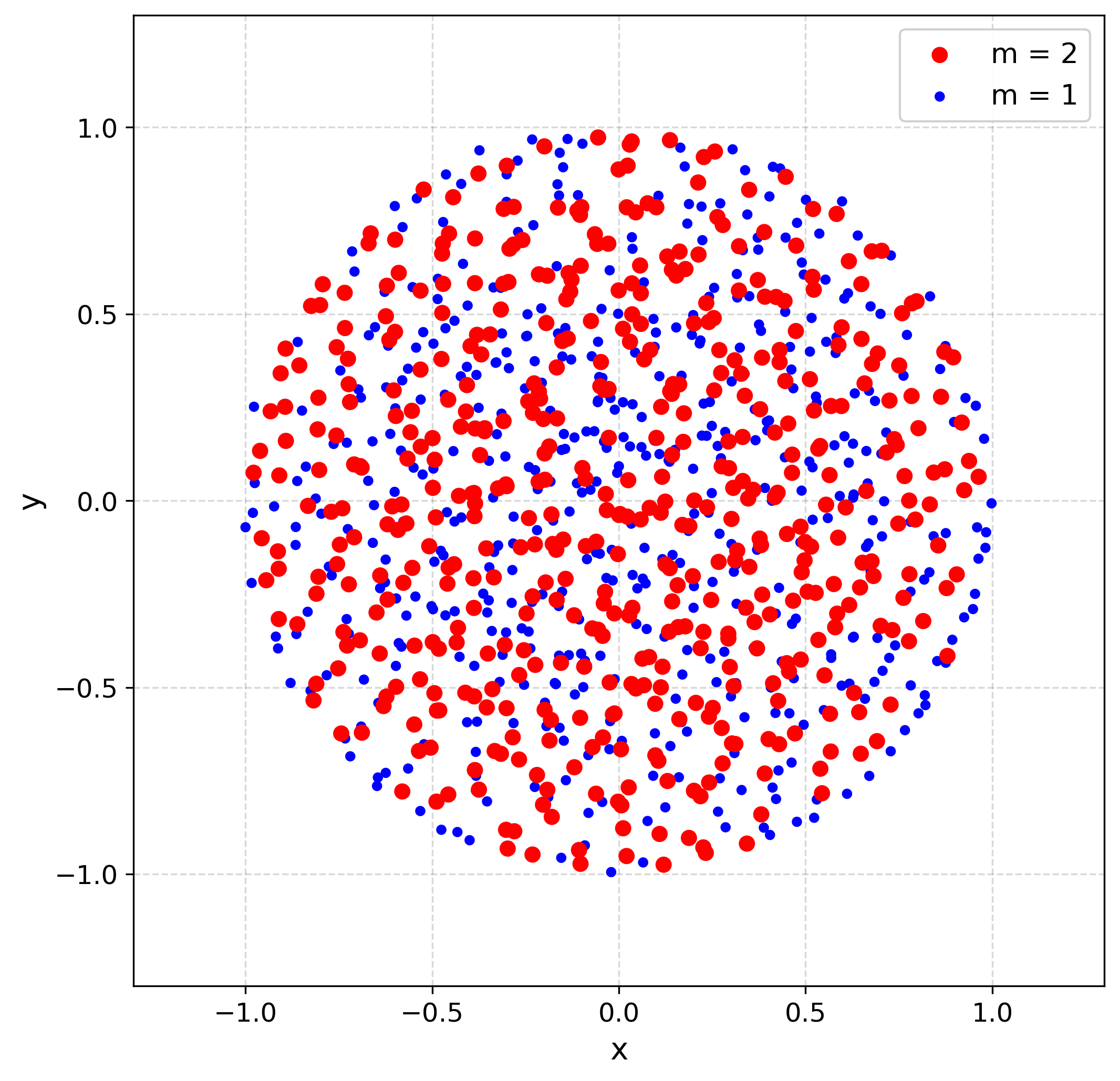
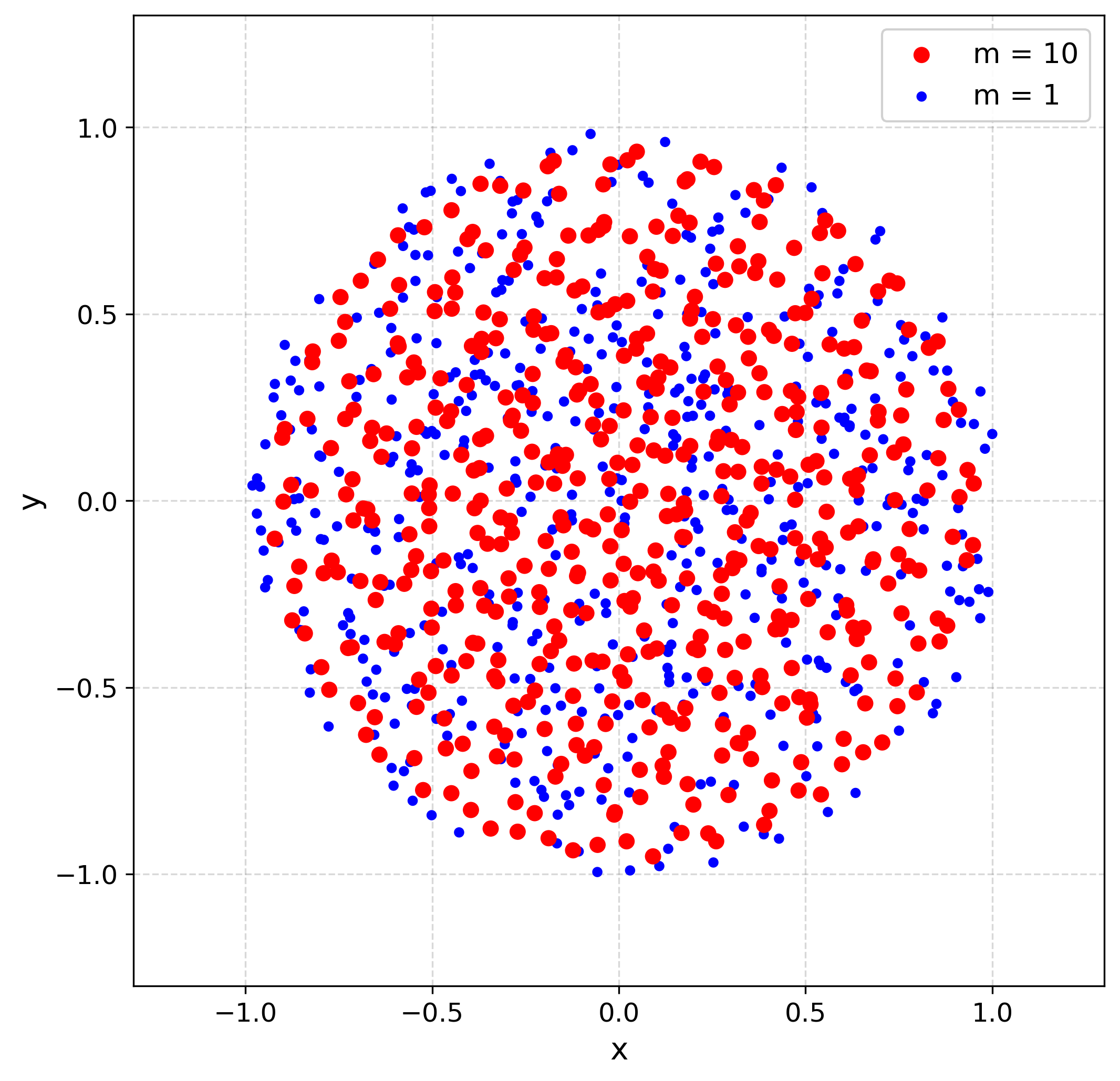
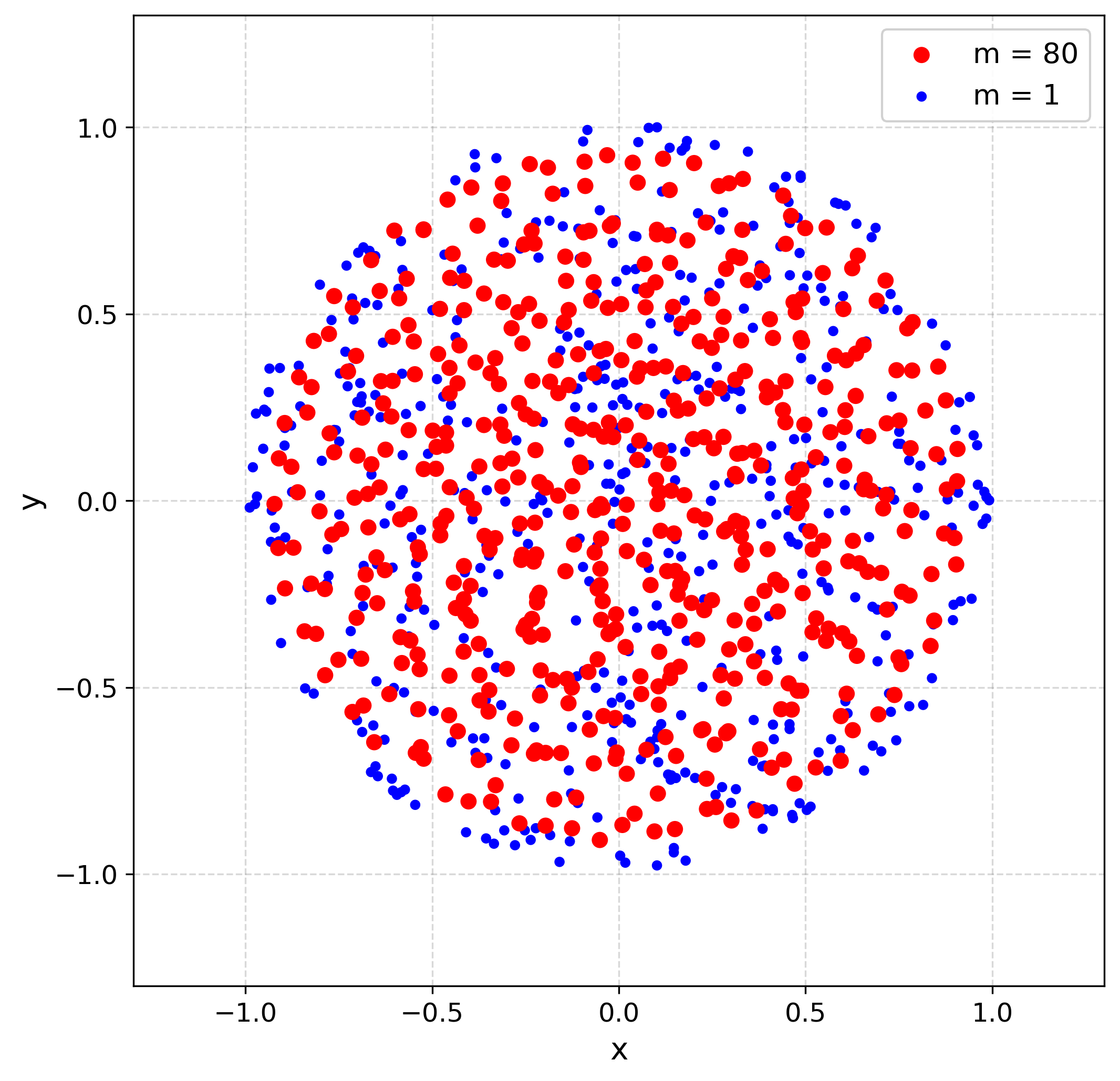
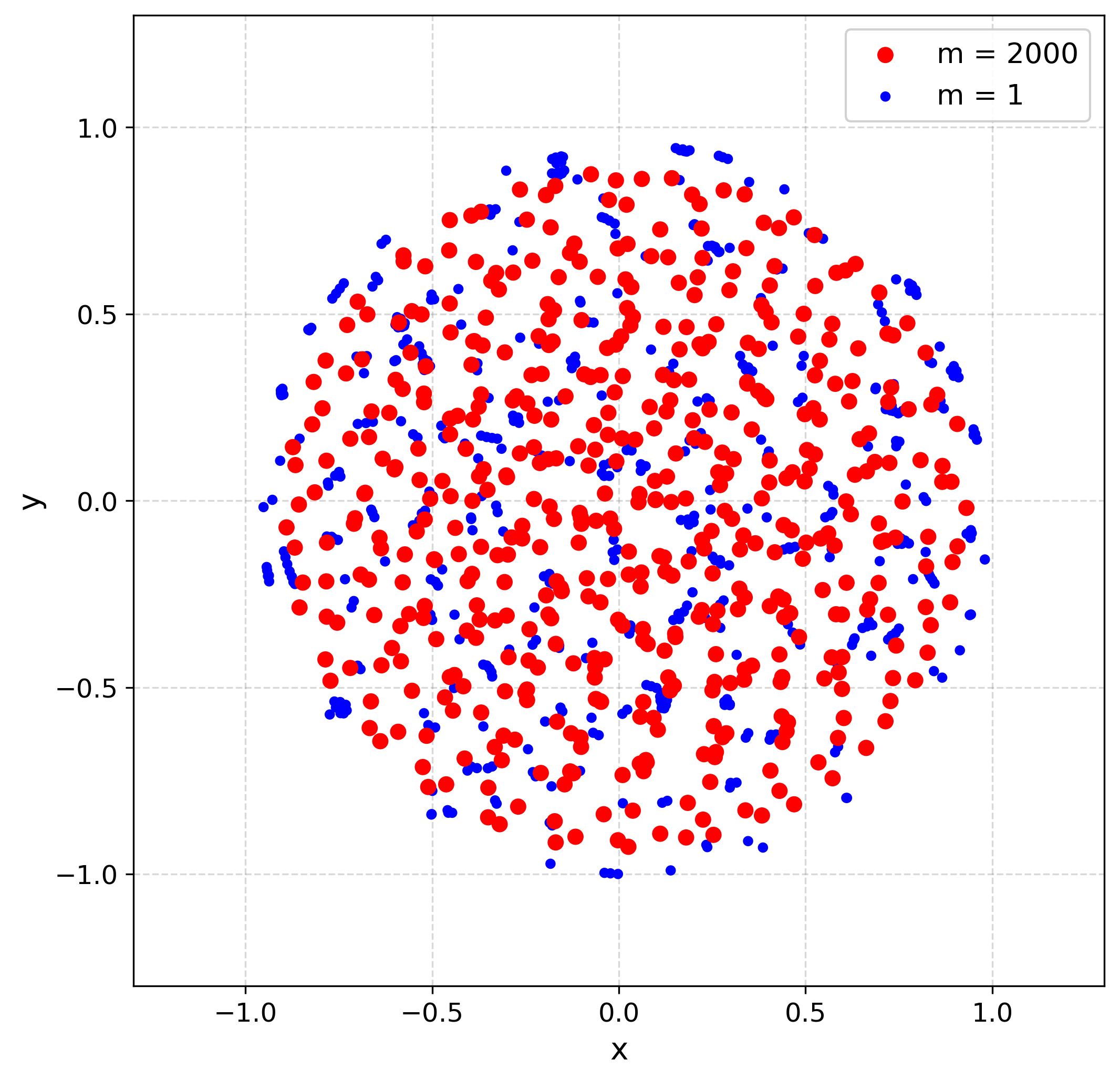
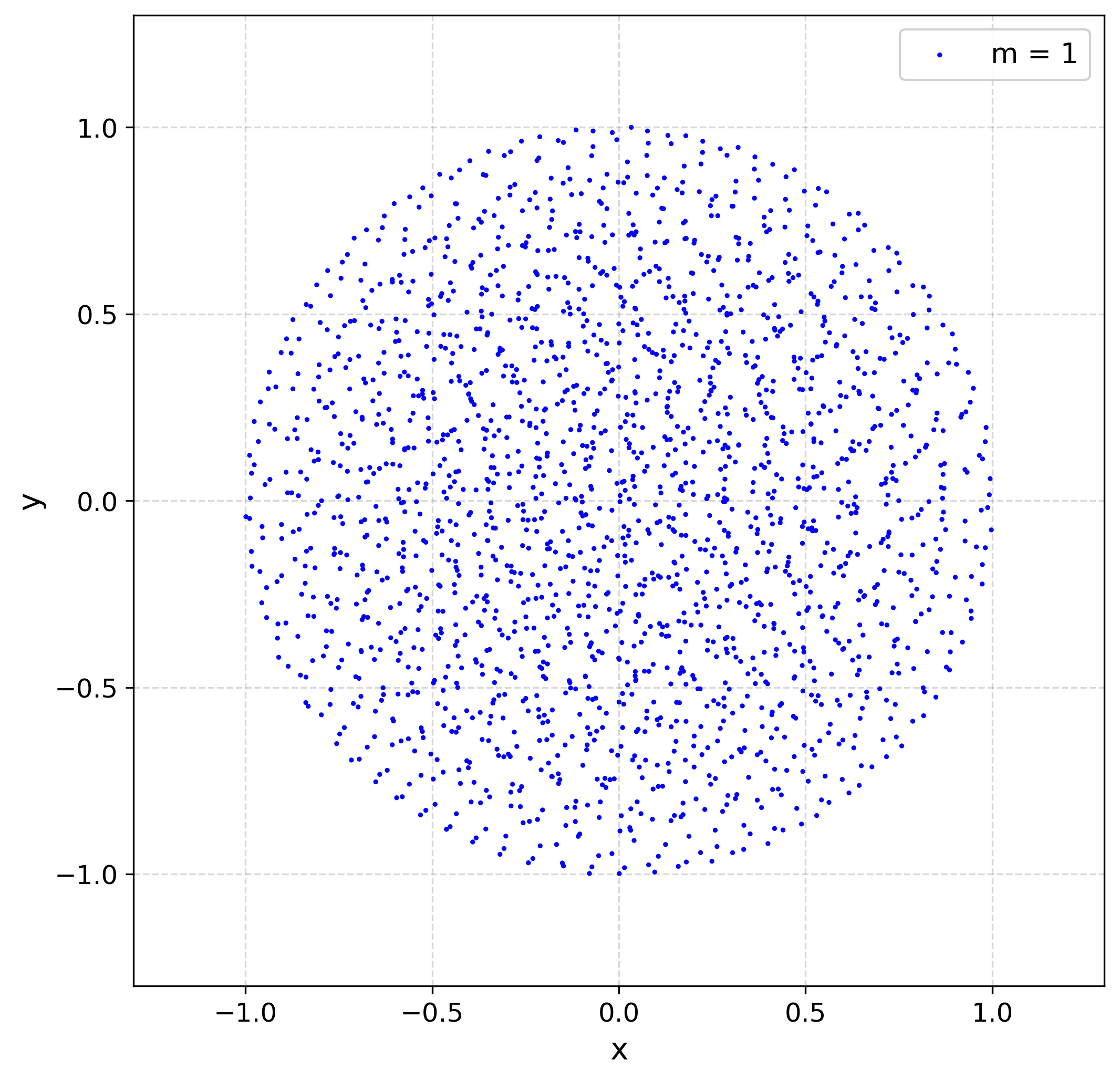
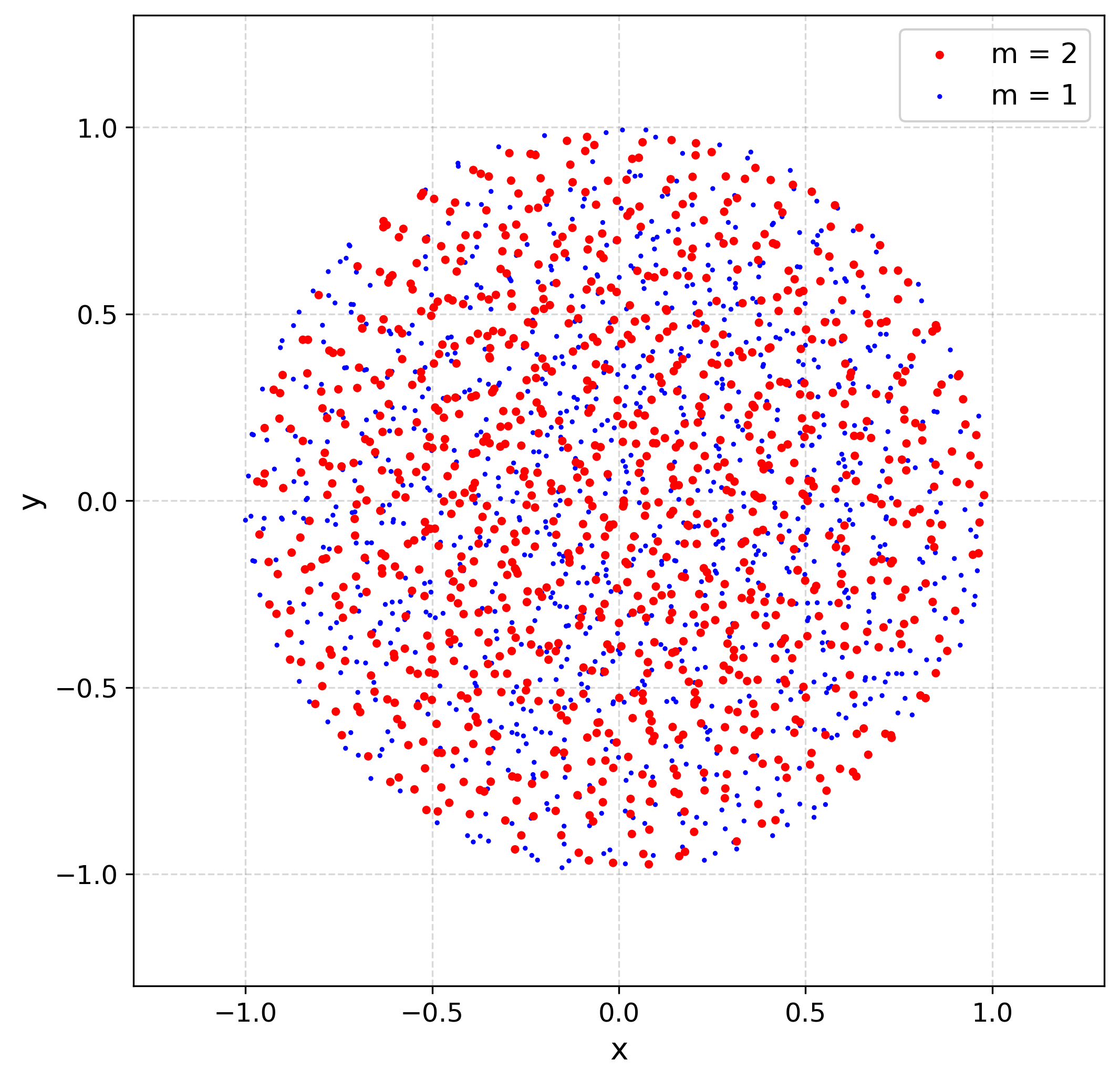
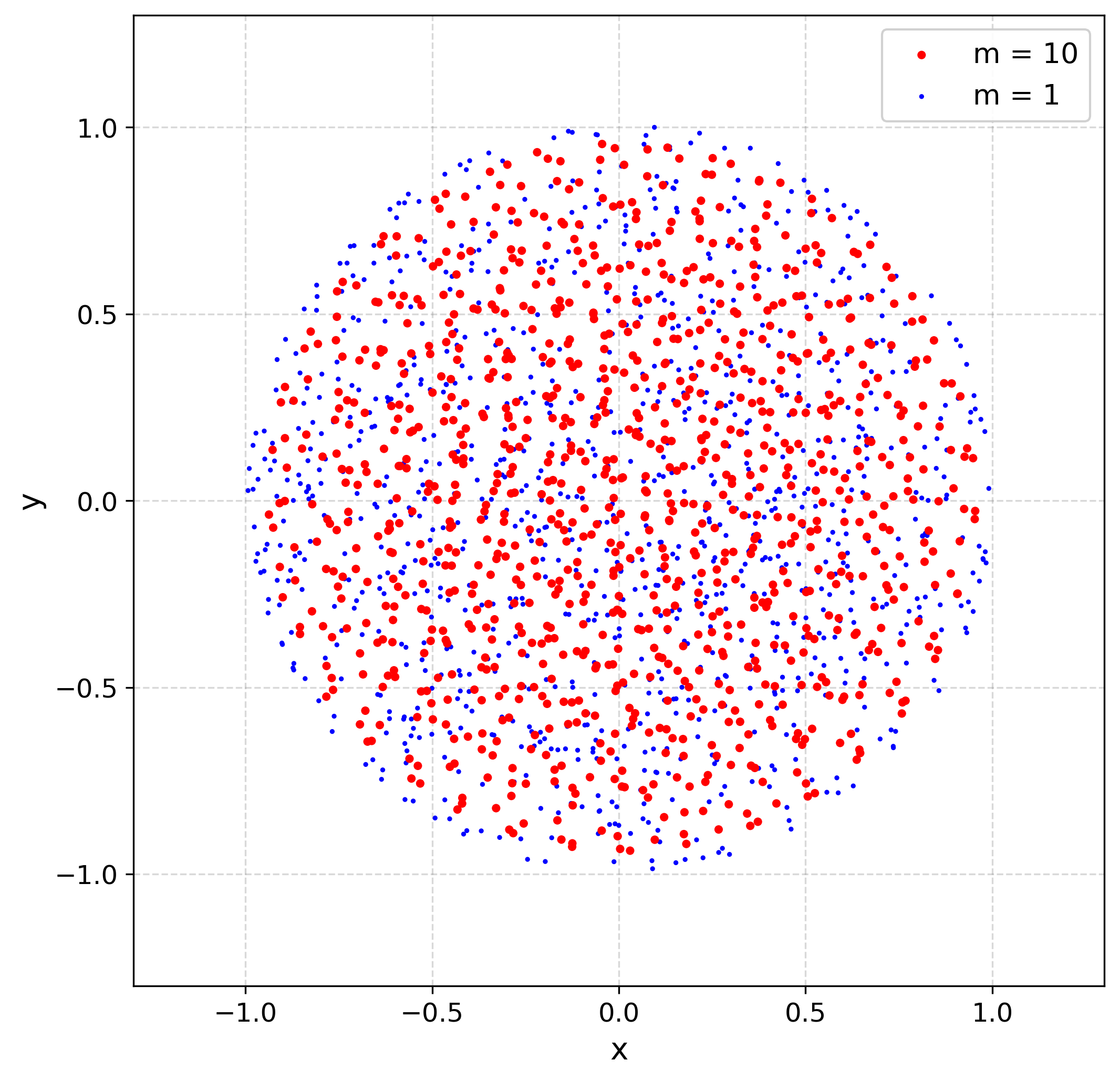
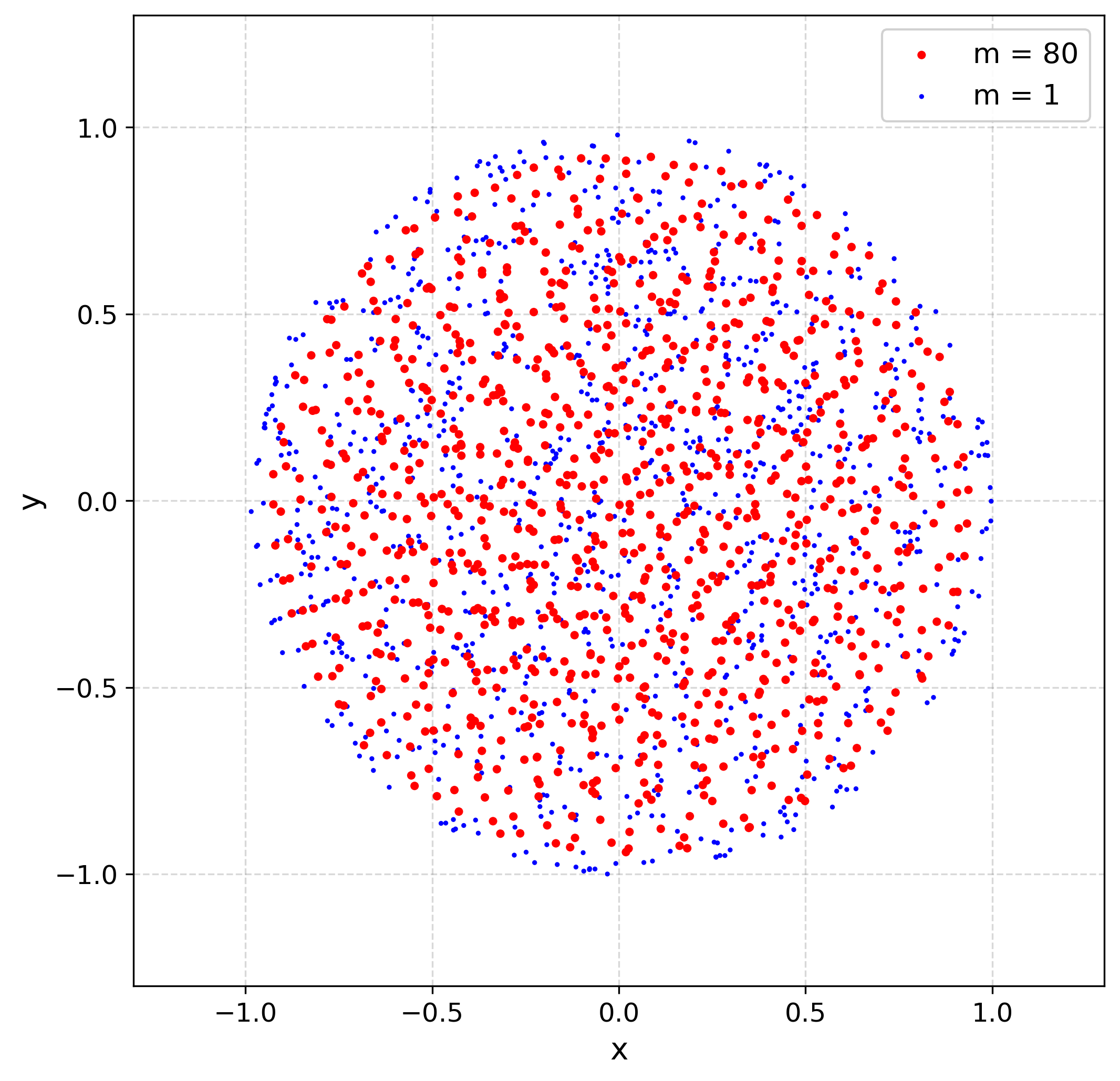
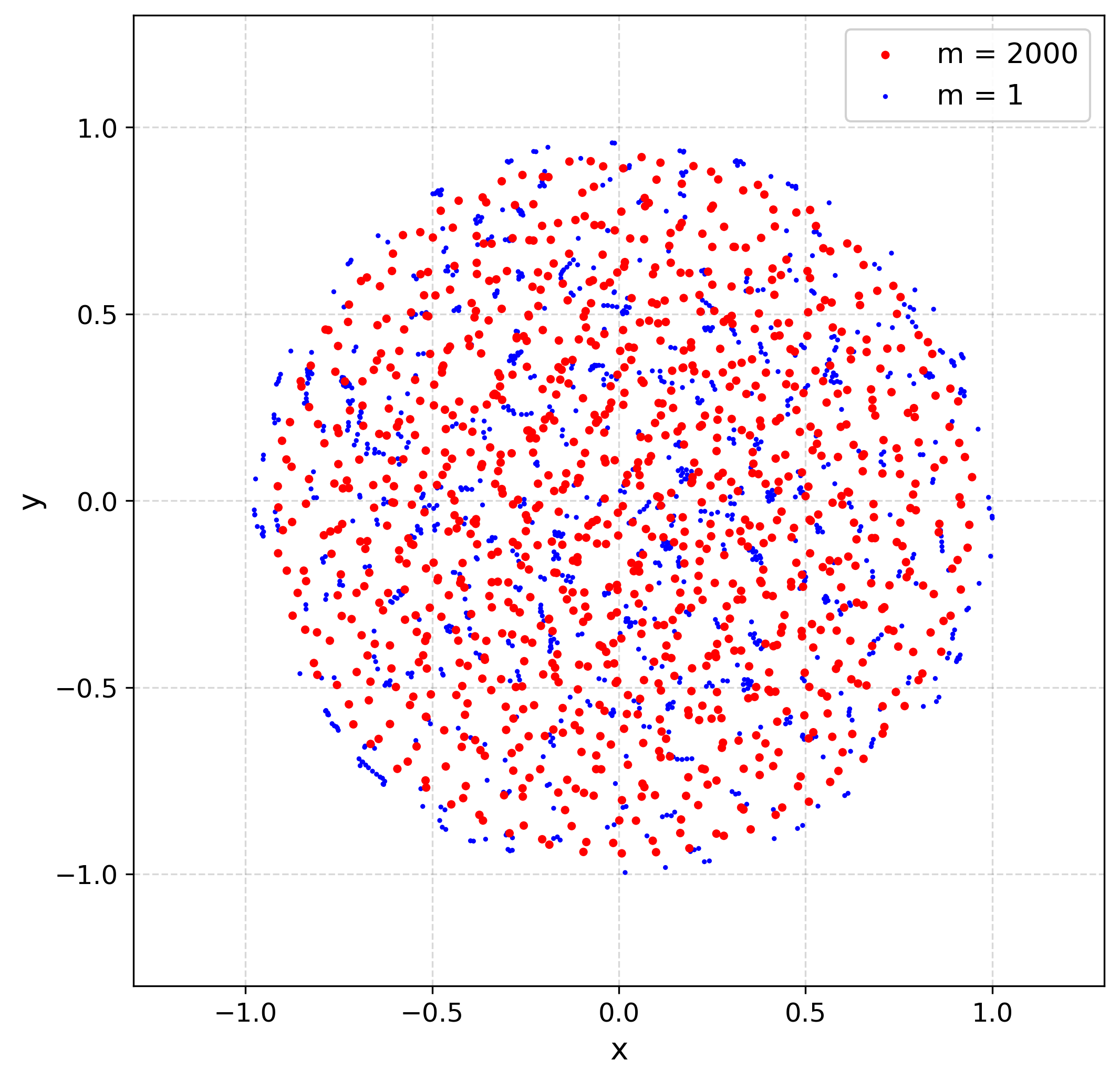
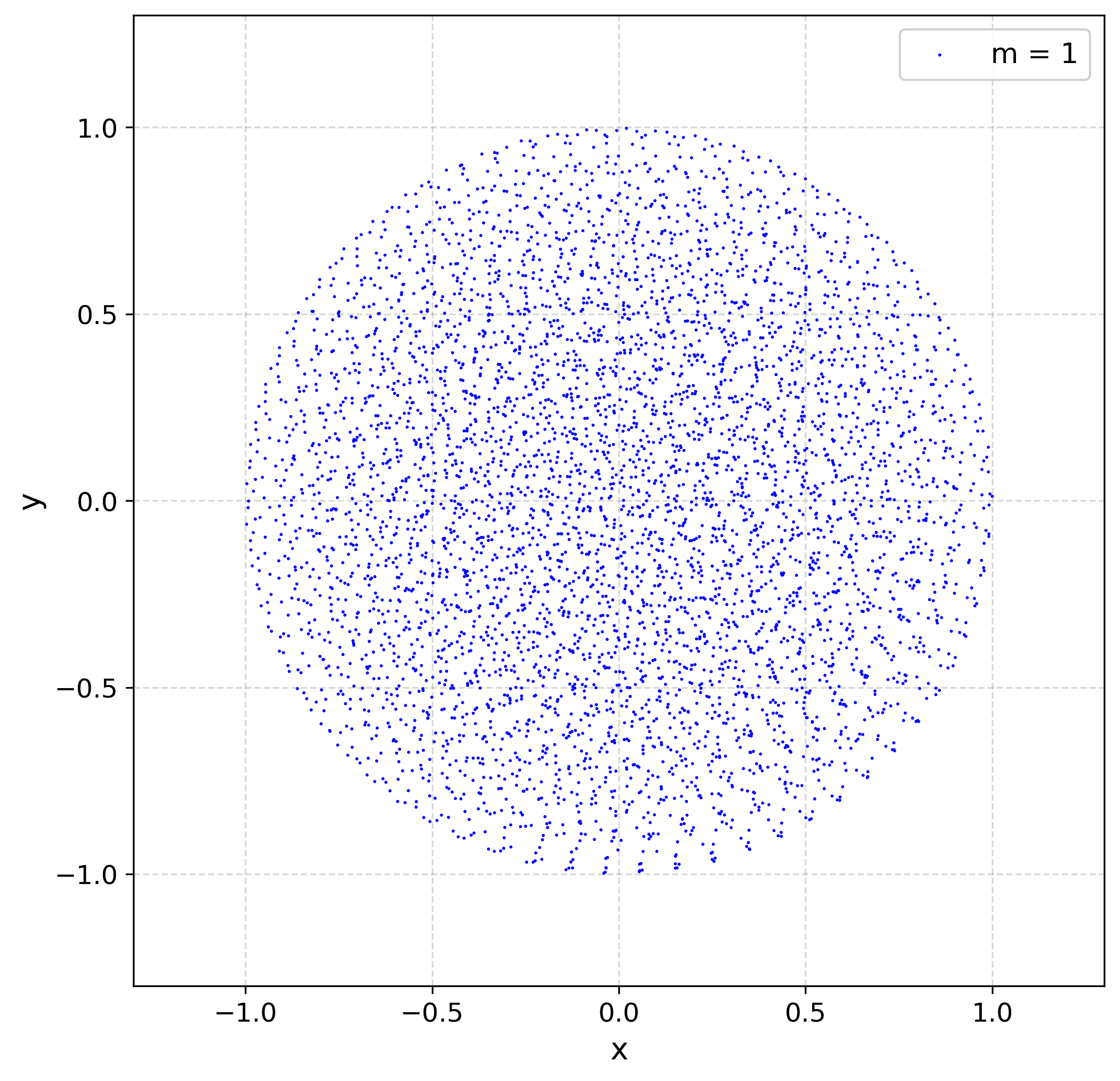
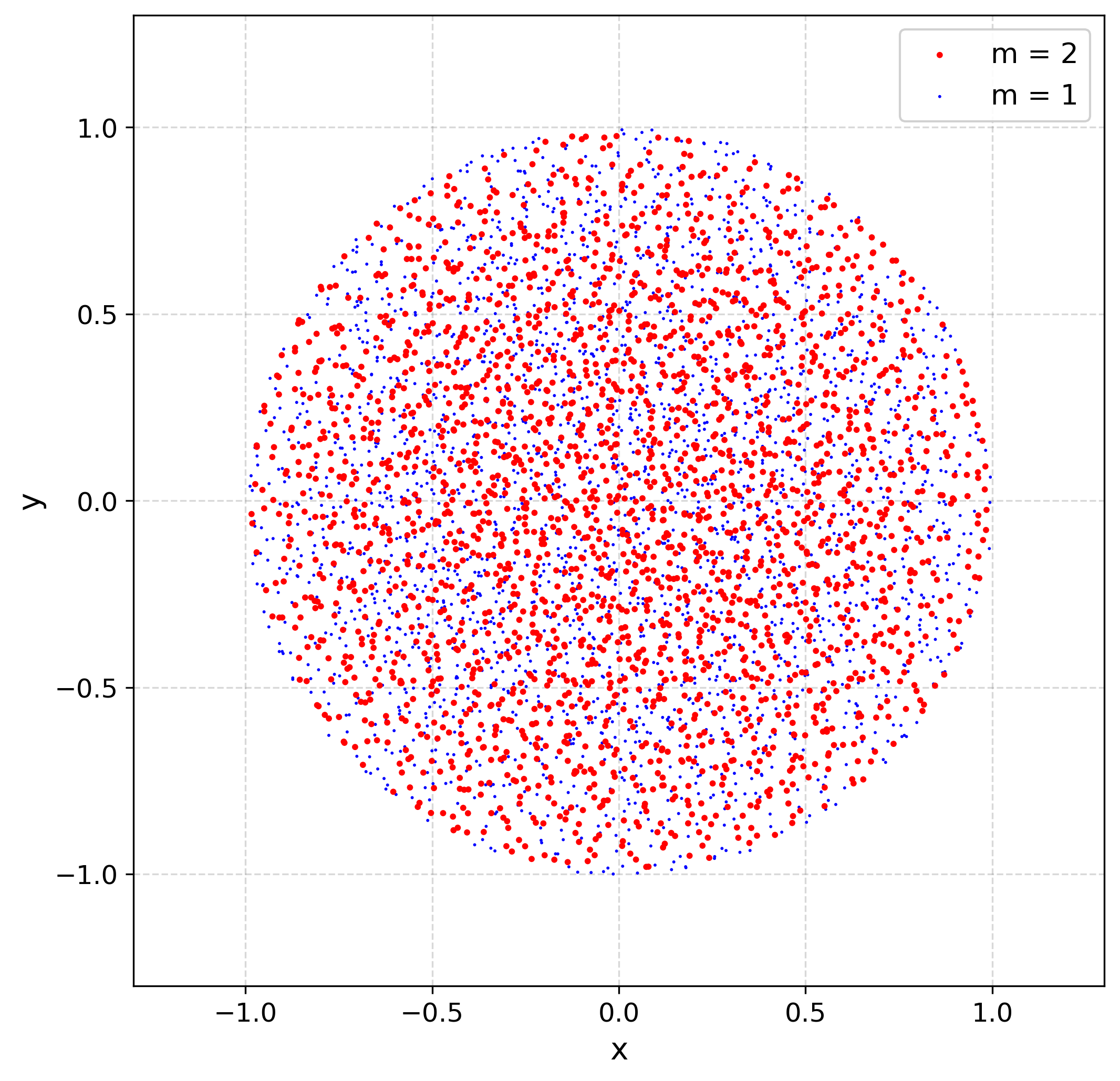
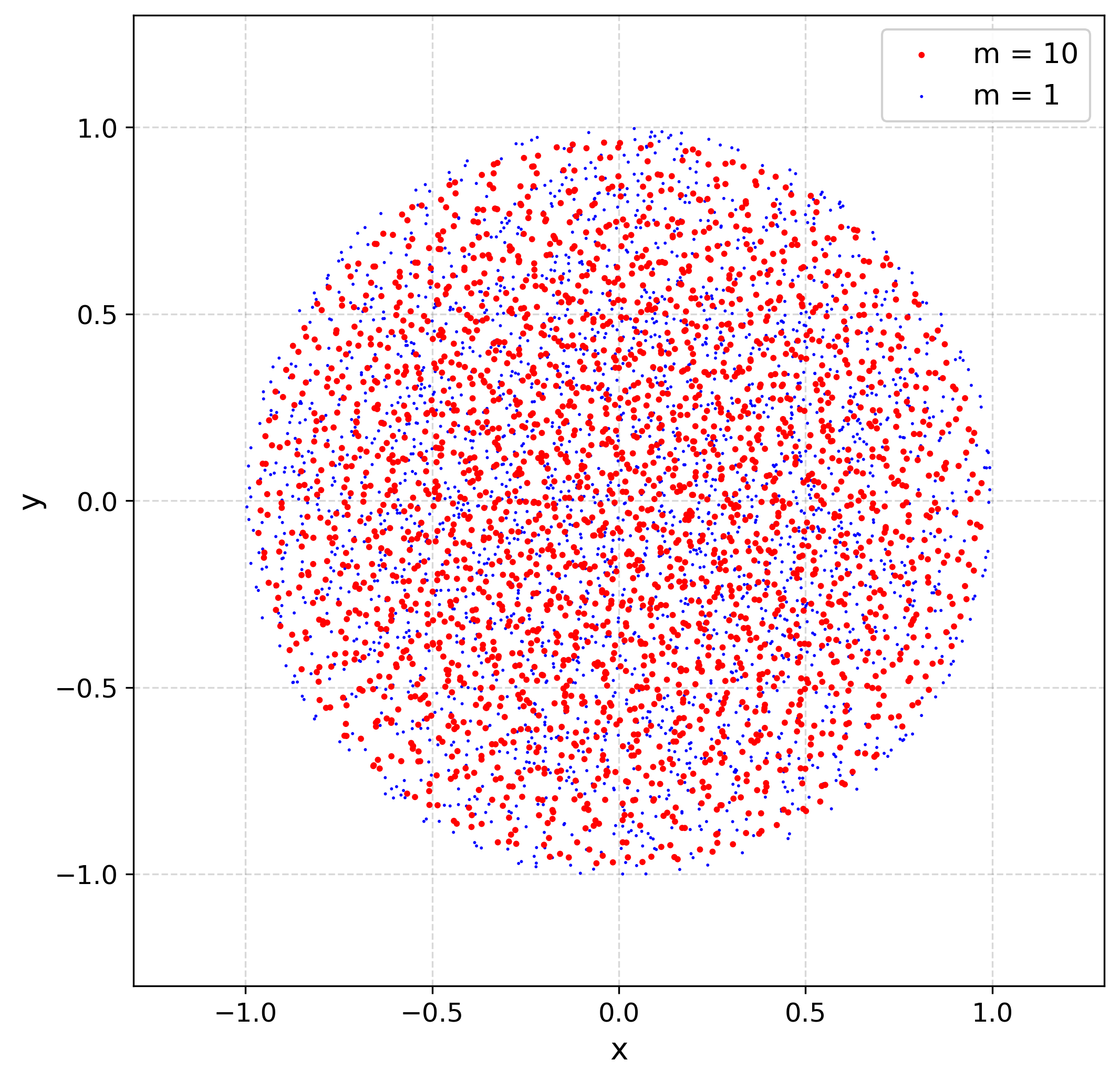
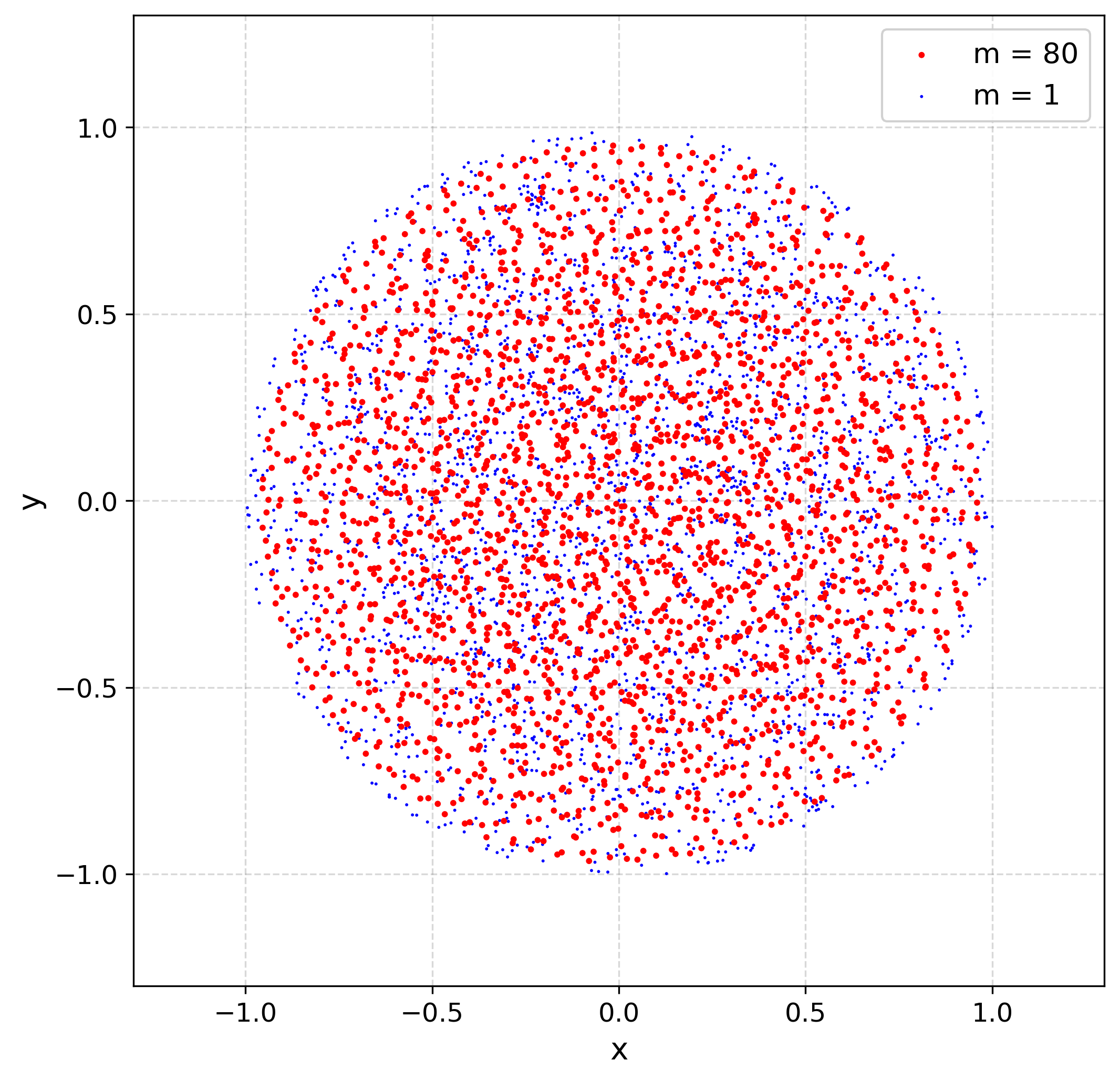
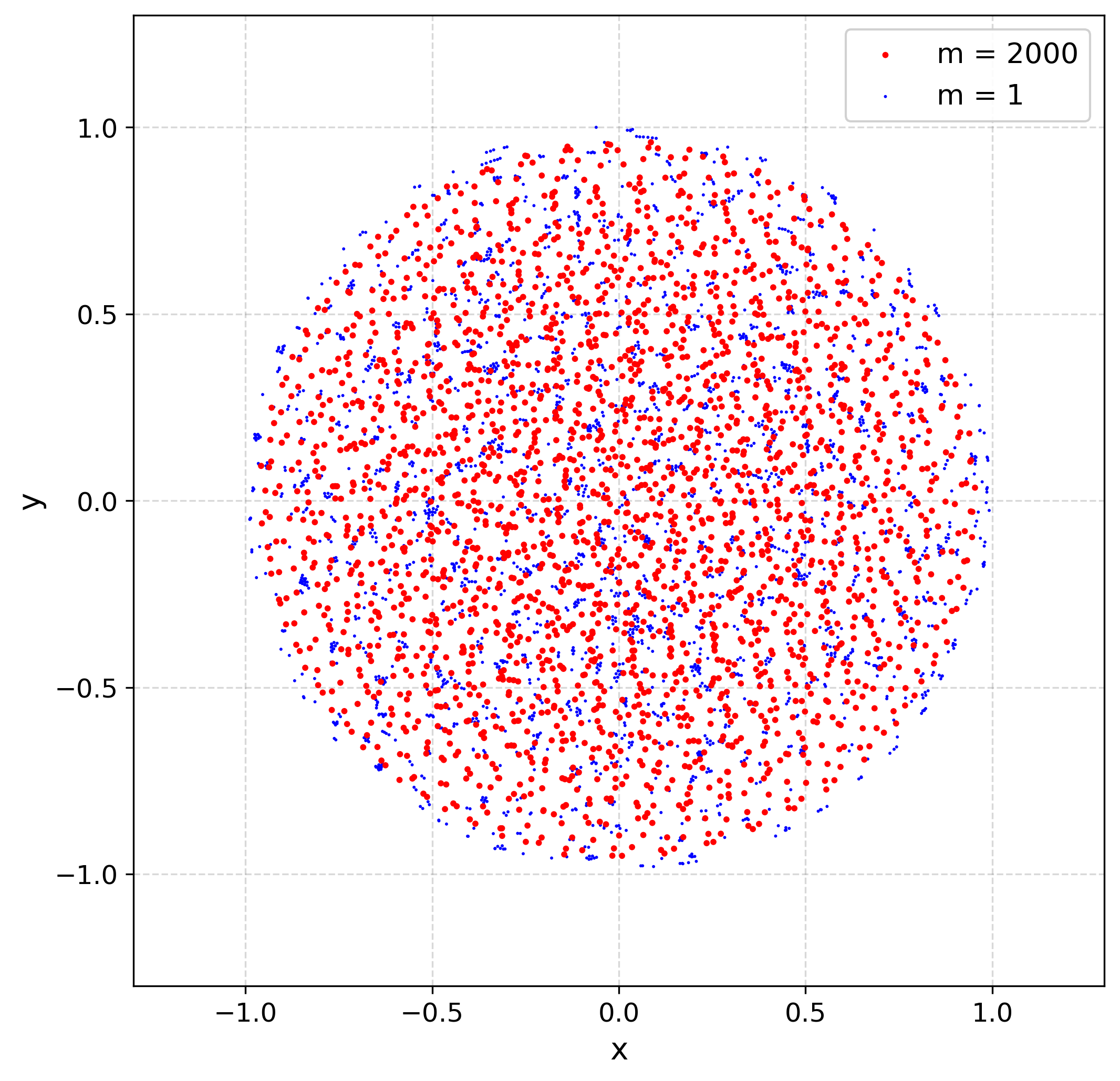
These are central configurations — critical points of the shape potential VS = √I × W on the pre-shape sphere, computed via gradient descent with 100 random restarts per configuration. Each plot shows the minimum-complexity configuration for N particles with a 50/50 mass split. Heavy particles (red) and light particles (blue) are sized by mass. For 3D configurations, positions are projected onto the plane of greatest variance.
All Results
Select a grouping below to see the full plots, or use the buttons above to jump directly.
N = 100, 2D
Reproducing Maria’s results — 5 mass ratios
N = 100, 3D
Same counts, three dimensions — 5 mass ratios
N = 500, 3D
Five hundred particles — 5 mass ratios
N = 1000, 3D
One thousand particles — 5 mass ratios
N = 2000, 3D
Two thousand particles — 5 mass ratios
N = 5000, 3D
Five thousand particles — 5 mass ratios
Shape Complexity Values
| Config | VS |
|---|---|
| N=100, 2D, equal | 52,231 |
| N=100, 2D, 1:2 | 142,784 |
| N=100, 2D, 1:10 | 3,555,587 |
| N=100, 2D, 1:80 | 514,763,640 |
| N=100, 2D, 1:2000 | 1,557,299,569,754 |
| N=100, 3D, equal | 43,325 |
| N=100, 3D, 1:2 | 118,835 |
| N=100, 3D, 1:10 | 2,988,269 |
| N=100, 3D, 1:80 | 434,340,799 |
| N=100, 3D, 1:2000 | 1,314,787,171,612 |
| N=500, 3D, equal | 2,537,139 |
| N=500, 3D, 1:2 | 6,980,961 |
| N=500, 3D, 1:10 | 178,325,230 |
| N=500, 3D, 1:80 | 26,132,347,551 |
| N=500, 3D, 1:2000 | 79,211,871,566,381 |
| N=1000, 3D, equal | 14,479,237 |
| N=1000, 3D, 1:2 | 39,862,518 |
| N=1000, 3D, 1:10 | 1,021,235,975 |
| N=1000, 3D, 1:80 | 149,882,119,501 |
| N=1000, 3D, 1:2000 | 454,432,163,200,919 |
| N=2000, 3D, equal | 82,361,363 |
| N=2000, 3D, 1:2 | 226,827,504 |
| N=2000, 3D, 1:10 | 5,821,639,500 |
| N=2000, 3D, 1:80 | 855,223,804,181 |
| N=2000, 3D, 1:2000 | 2,593,391,805,253,071 |
| N=5000, 3D, equal | 817,408,304 |
| N=5000, 3D, 1:2 | 2,251,798,693 |
| N=5000, 3D, 1:10 | 57,874,707,862 |
| N=5000, 3D, 1:80 | 8,508,278,627,932 |
| N=5000, 3D, 1:2000 | 25,803,776,176,303,990 |
Method
Configurations are computed by minimising VS = √Icm × W on the pre-shape sphere {∑qi = 0, ∑|qi|² = 1}, where Icm = ∑ mi |qi − qcm|² is the moment of inertia about the centre of mass and W = ∑i<j mi mj / rij is the Newton potential. Gradient descent uses mass preconditioning (dividing the gradient by particle mass) to equalise convergence rates for light and heavy particles. Optimisation uses cosine-annealed learning rate over 8,000–18,000 iterations with 40–100 random restarts, selecting the lowest VS. Computed on NVIDIA H100 GPUs via Modal using JAX with float64 precision.
N = 100 Configurations
100 particles with 50/50 mass split at five mass ratios. The 2D results reproduce Maria’s methodology and can be compared directly to her figures. The 3D results use the same parameters, projected to 2D via PCA for display.
2D — Reproducing Maria’s Results
These match Maria’s methodology: 100 particles in 2D with 50/50 mass split. Compare directly to her figures.
3D
Same particle counts and mass ratios, now in three dimensions. Projected to 2D via PCA for display.
Shape Complexity — N = 100
| Config | VS |
|---|---|
| 2D, equal | 52,231 |
| 2D, 1:2 | 142,784 |
| 2D, 1:10 | 3,555,587 |
| 2D, 1:80 | 514,763,640 |
| 2D, 1:2000 | 1,557,299,569,754 |
| 3D, equal | 43,325 |
| 3D, 1:2 | 118,835 |
| 3D, 1:10 | 2,988,269 |
| 3D, 1:80 | 434,340,799 |
| 3D, 1:2000 | 1,314,787,171,612 |
N = 500 Configurations
Five hundred particles in 3D. The molecular segregation at high mass ratios persists at scale — heavy particles form a uniform scaffold, light particles cluster in the interstices.
3D
Projected to 2D via PCA for display. Five mass ratios from equal to 1:2000.
Shape Complexity — N = 500
| Config | VS |
|---|---|
| 3D, equal | 2,537,139 |
| 3D, 1:2 | 6,980,961 |
| 3D, 1:10 | 178,325,230 |
| 3D, 1:80 | 26,132,347,551 |
| 3D, 1:2000 | 79,211,871,566,381 |
N = 1000 Configurations
One thousand particles in 3D. At this scale the mass-dependent shell structure is clearly visible: light particles are pushed to the outer boundary of the configuration.
3D
Projected to 2D via PCA for display. Five mass ratios from equal to 1:2000.
Shape Complexity — N = 1000
| Config | VS |
|---|---|
| 3D, equal | 14,479,237 |
| 3D, 1:2 | 39,862,518 |
| 3D, 1:10 | 1,021,235,975 |
| 3D, 1:80 | 149,882,119,501 |
| 3D, 1:2000 | 454,432,163,200,919 |
N = 2000 Configurations
Two thousand particles in 3D. At this scale the shell structure becomes increasingly pronounced — heavy particles form a regular interior lattice while light particles occupy the outer layers.
3D
Projected to 2D via PCA for display. Five mass ratios from equal to 1:2000.
Shape Complexity — N = 2000
| Config | VS |
|---|---|
| 3D, equal | 82,361,363 |
| 3D, 1:2 | 226,827,504 |
| 3D, 1:10 | 5,821,639,500 |
| 3D, 1:80 | 855,223,804,181 |
| 3D, 1:2000 | 2,593,391,805,253,071 |
N = 5000 Configurations
Five thousand particles in 3D. The largest configurations computed, showing clear mass-dependent spatial organisation at extreme mass ratios.
3D
Projected to 2D via PCA for display. Five mass ratios from equal to 1:2000.
Shape Complexity — N = 5000
| Config | VS |
|---|---|
| 3D, equal | 817,408,304 |
| 3D, 1:2 | 2,251,798,693 |
| 3D, 1:10 | 57,874,707,862 |
| 3D, 1:80 | 8,508,278,627,932 |
| 3D, 1:2000 | 25,803,776,176,303,990 |